
Maison Perrier-Jouët was founded in Epernay by Pierre-Nicolas Perrier and Rose-Adélaïde Jouët, a newly married couple united by their love of art and nature, and their bold vision of champagne. She was a cultured young woman from a family of Normandy merchants; he a keen botanist and knowledgeable winemaker.
Free-spirited and independent-minded, they were determined that Maison Perrier-Jouët would be a House with a difference, defined by audacious decisions in the pursuit of quality. In particular, they chose the Chardonnay grape – little used at the time – as the Perrier-Jouët signature, initiating the intricate floral style which instantly sets its champagnes apart.
The History
Started with love, sustained by passion.
Discover the fascinating story of Maison Perrier-Jouët through 200 years of landmark moments.
Discover the fascinating story of Maison Perrier-Jouët through 200 years of landmark moments.
Perrier-Jouët at a glance
Maison Perrier-Jouët was founded in 1811 from a couple’s shared love of nature and passion for art. From the start, they chose the Chardonnay grape variety as the signature of the House, defining the instantly recognisable floral style of its champagnes.
For over 200 years, art and nature have remained a constant source of inspiration, illustrated by Maison Perrier-Jouët’s historic association with the Art Nouveau movement and by its many contemporary collaborations with creative talents, who reinterpret its heritage for the 21st century.
Today, in the face of climate change, the House’s close relationship with nature is expressed in initiatives to respect and preserve the environment.
For over 200 years, art and nature have remained a constant source of inspiration, illustrated by Maison Perrier-Jouët’s historic association with the Art Nouveau movement and by its many contemporary collaborations with creative talents, who reinterpret its heritage for the 21st century.
Today, in the face of climate change, the House’s close relationship with nature is expressed in initiatives to respect and preserve the environment.
Chardonnay: the Perrier-Jouët signature
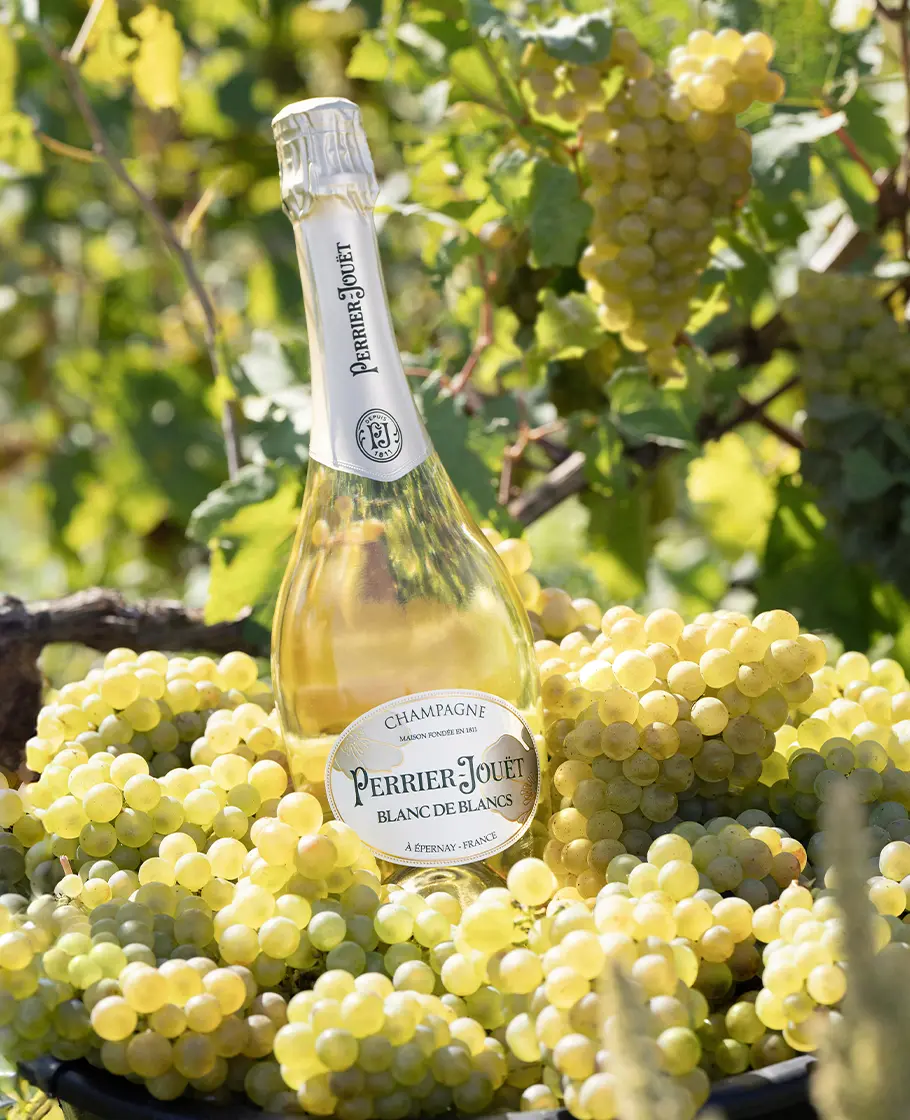
Chardonnay was a daring choice on the part of Maison Perrier-Jouët’s founders. Now prized for its freshness and finesse, it is Champagne’s main white-skin, white-juice grape variety. At the time, however, it was relatively unpopular, with a reputation for being hard to cultivate.
Undeterred, Pierre-Nicolas Perrier and his son Charles were among the first to identify the Côte des Blancs, to the south of Epernay, as an ideal terroir for Chardonnay. With considerable vision, they acquired vineyards in the villages of Cramant, Avize and Chouilly, all of which would later be classed as Grands Crus, the highest rank on the quality scale.
Today, Chardonnay represents 56% of the Perrier-Jouët vineyard, compared with 30% for the Champagne AOC as a whole.
Undeterred, Pierre-Nicolas Perrier and his son Charles were among the first to identify the Côte des Blancs, to the south of Epernay, as an ideal terroir for Chardonnay. With considerable vision, they acquired vineyards in the villages of Cramant, Avize and Chouilly, all of which would later be classed as Grands Crus, the highest rank on the quality scale.
Today, Chardonnay represents 56% of the Perrier-Jouët vineyard, compared with 30% for the Champagne AOC as a whole.
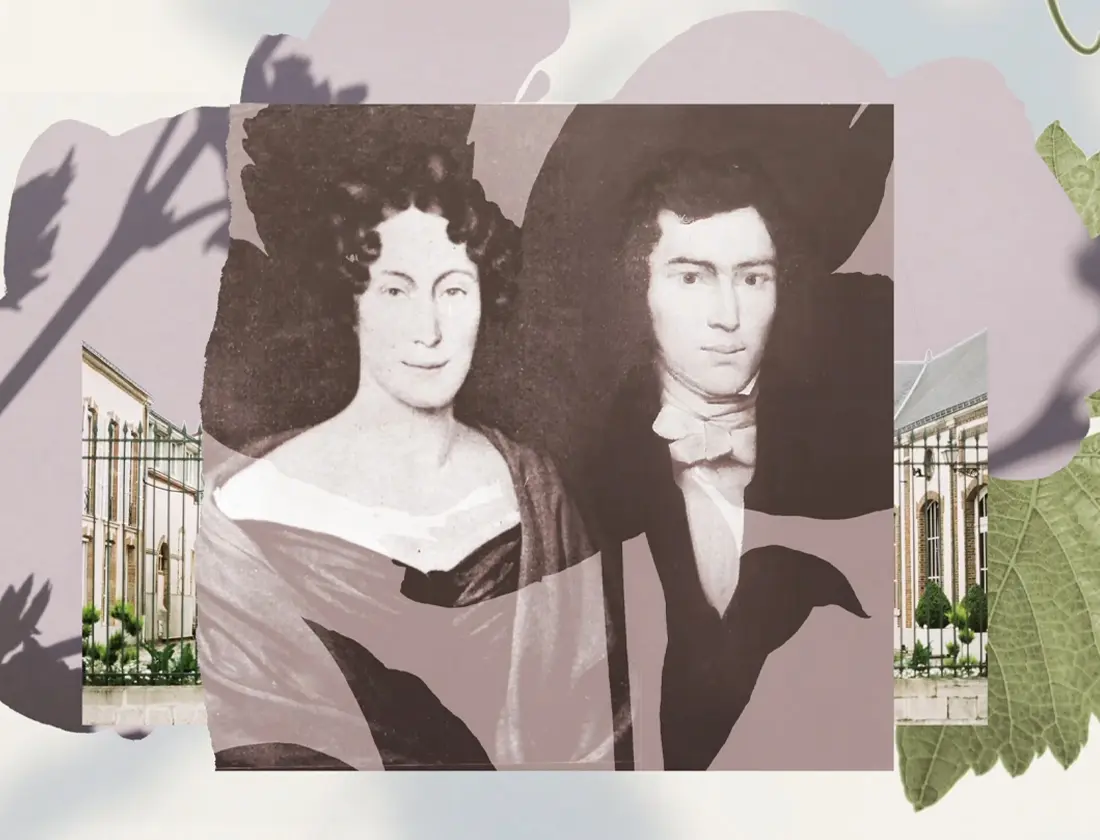
1811
The Visionaries behind Perrier-Jouët
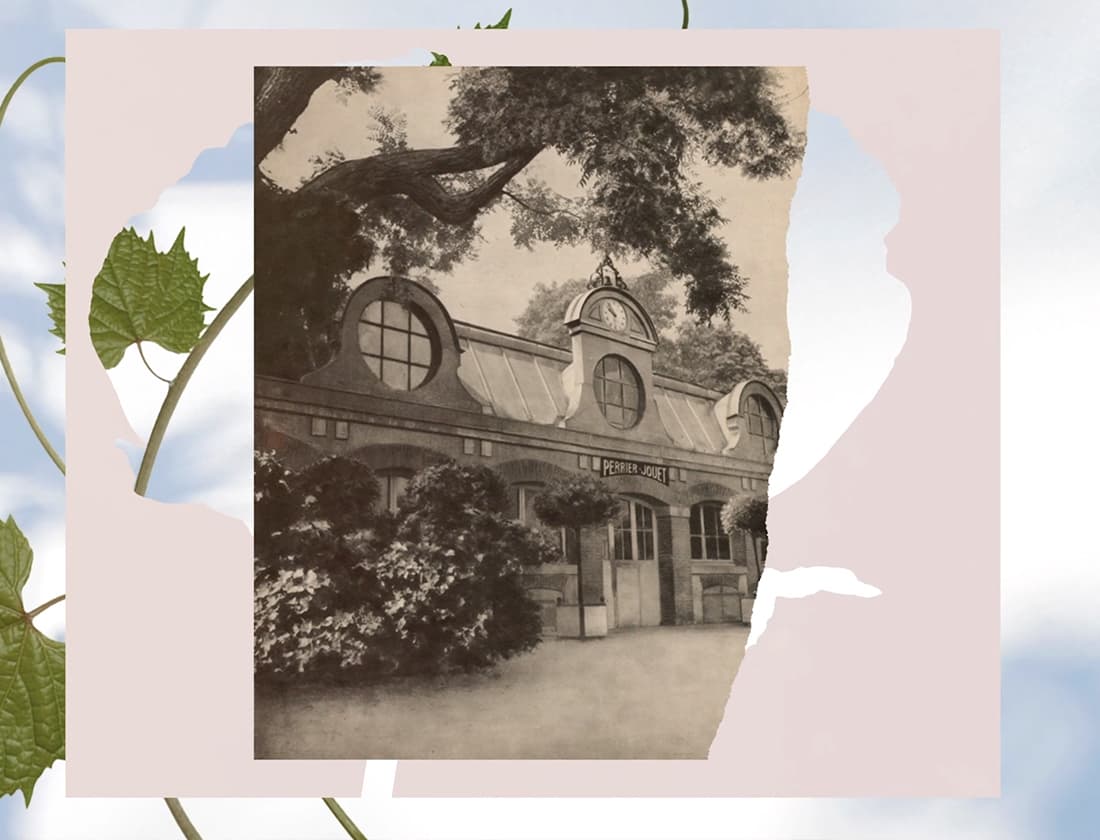
1846
Cuvée K
In response to the preference of British connoisseurs for a drier taste, Maison Perrier-Jouët created Cuvée K, the world’s first lightly dosed champagne in the style we now call “brut”. The remaining bottles of this legendary blend – the ancestor of today’s classic Perrier-Jouët Grand Brut – are carefully stored in the Perrier-Jouët cellars in Epernay, alongside the famous 1825 vintage, bottled by the founders, which is thought to be the oldest champagne still preserved in the region.
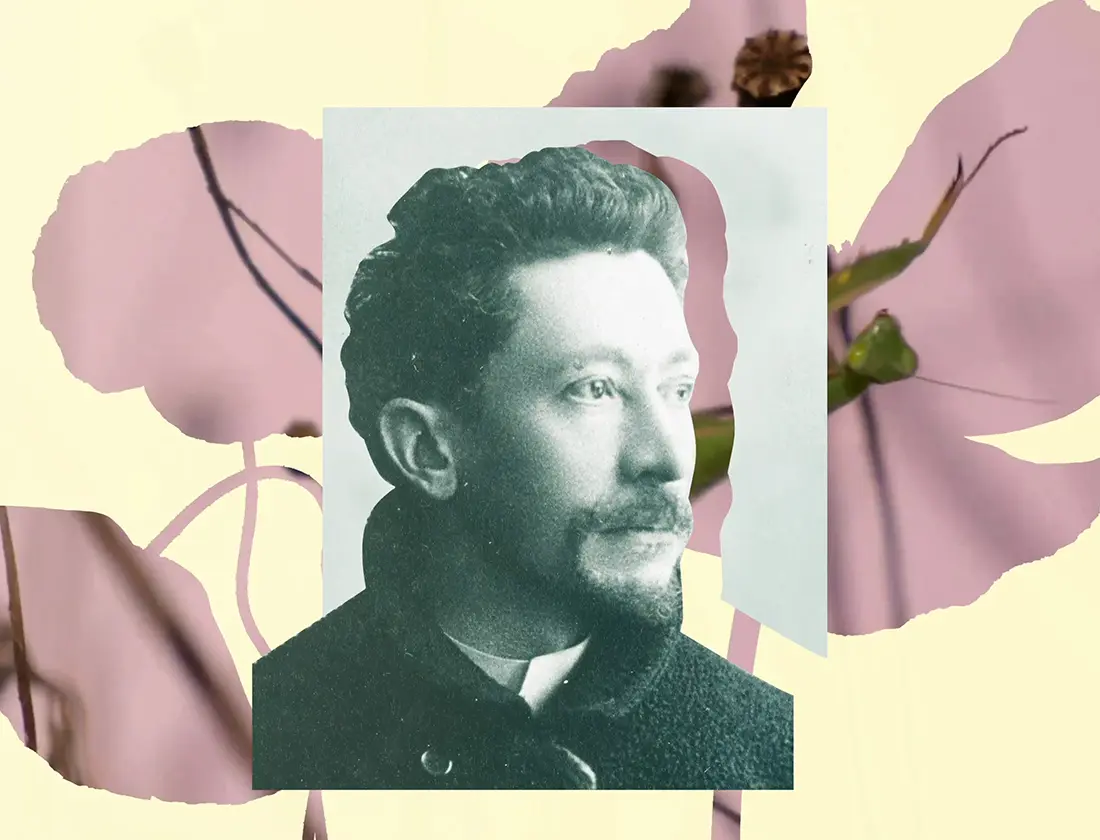
1902
The Birth of Belle Epoque
At the turn of the 20th century, Maison Perrier-Jouët was managed by Henri Gallice, the nephew of Charles Perrier, the son of the founders. Henri’s younger brother Octave spent much of his time in Paris, experiencing the excitement of the Belle Epoque and associating with the artistic avant-garde.
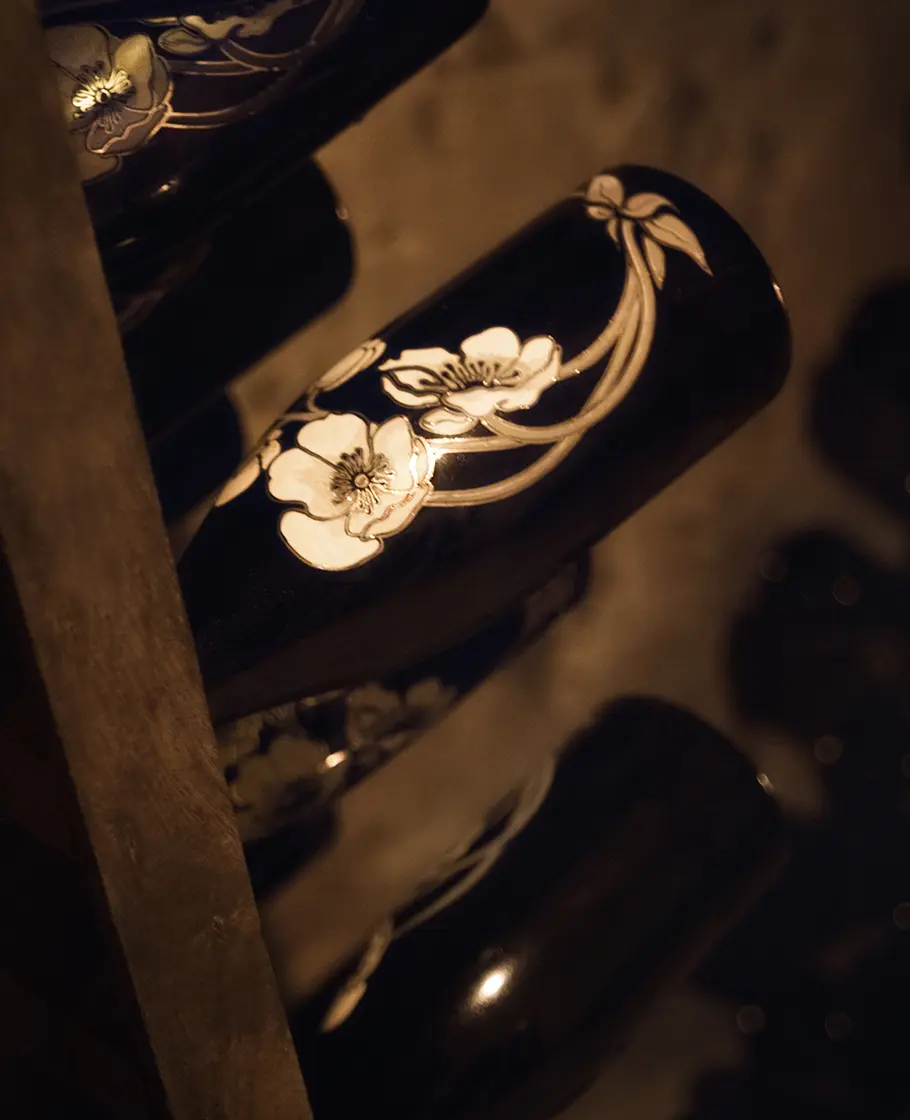
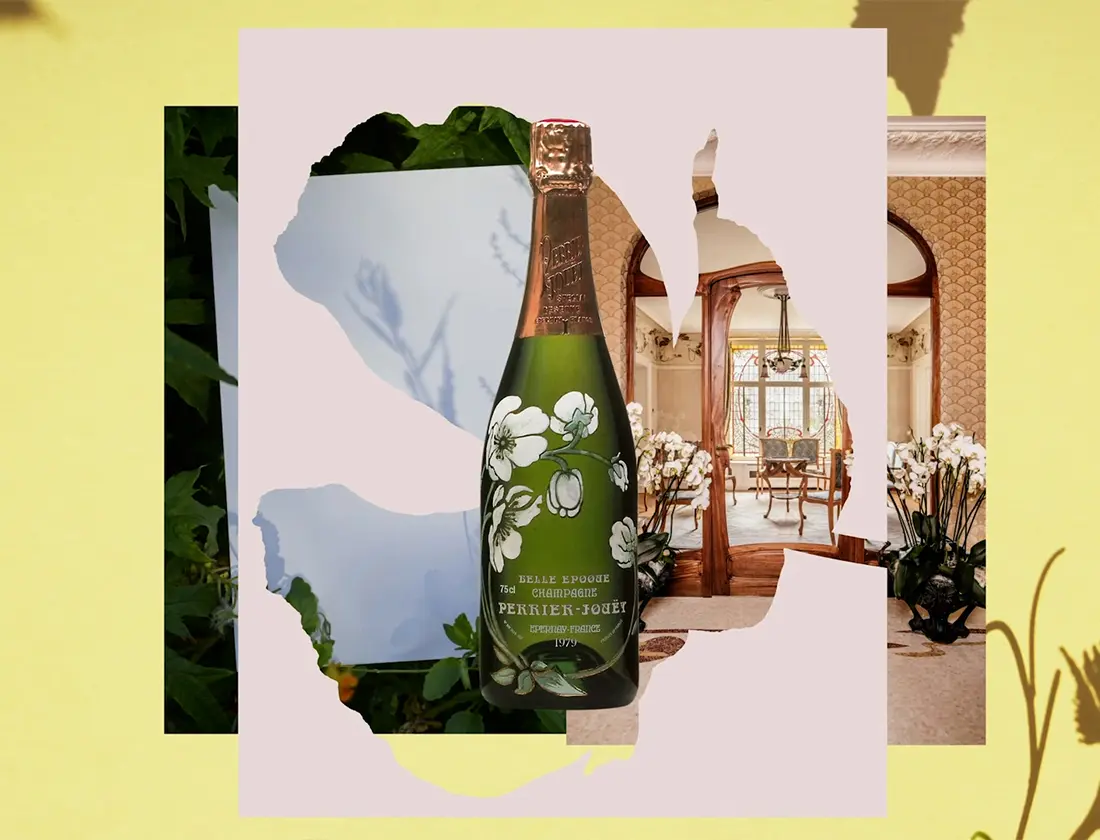
It is thought that he asked Emile Gallé, one of the pioneers of the French Art Nouveau movement, to create a design for Perrier-Jouët champagne. Four magnums enamelled with a delicate spray of Japanese white anemones were delivered in 1902, inspiring an exceptional cuvée that would later be renowned the world over as Perrier-Jouët Belle Epoque.
It is thought that he asked Emile Gallé, one of the pioneers of the French Art Nouveau movement, to create a design for Perrier-Jouët champagne. Four magnums enamelled with a delicate spray of Japanese white anemones were delivered in 1902, inspiring an exceptional cuvée that would later be renowned the world over as Perrier-Jouët Belle Epoque.
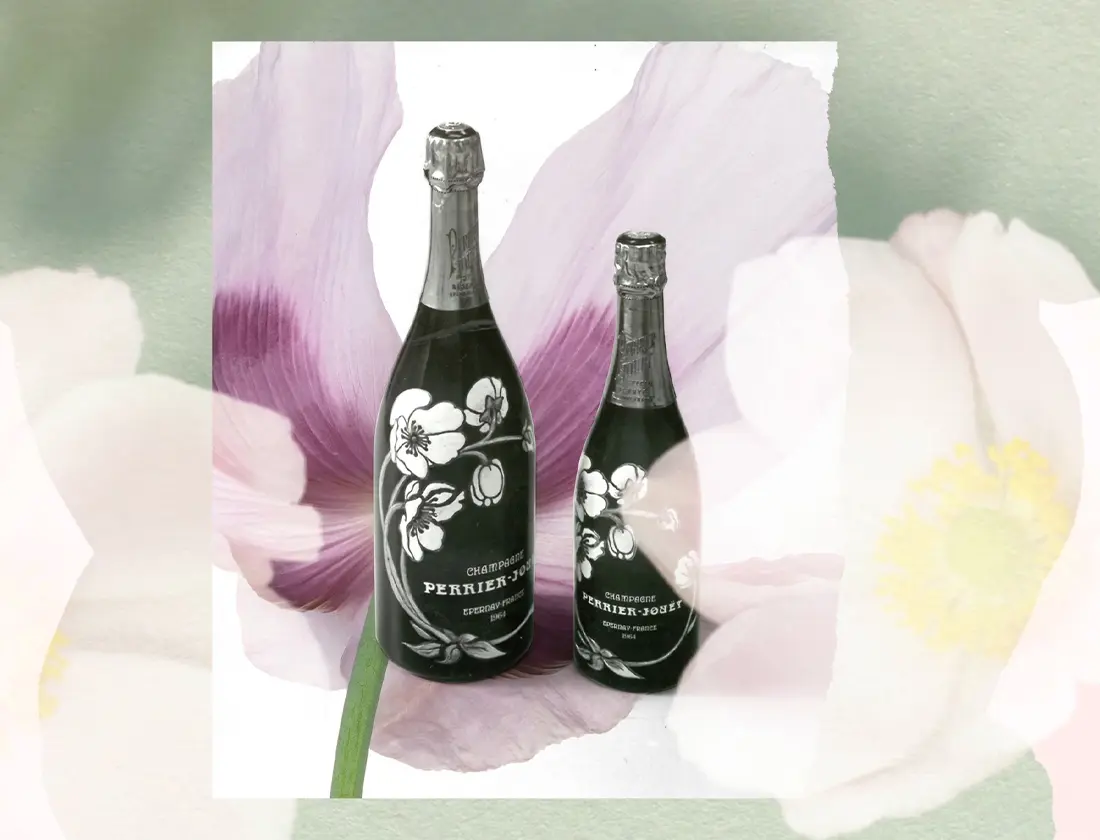
1964
An iconic Collection
By the 1960s, Perrier-Jouët Belle Epoque had become the emblem of the House, embodying its signature floral style and enduring pursuit of elegance. Over the following decades, the collection expanded with Perrier-Jouët Belle Epoque Rosé in 1983 and Perrier-Jouët Belle Epoque Blanc de Blancs in 1998, each offering a distinctive expression of the House’s Chardonnay expertise.
Alongside these vintage cuvées, the classic collection took shape with the launch of Perrier-Jouët Grand Brut in 1971, followed by Perrier-Jouët Blason Rosé in 1985 and Perrier-Jouët Blanc de Blancs in 2017, extending the House’s signature style to every occasion.
Alongside these vintage cuvées, the classic collection took shape with the launch of Perrier-Jouët Grand Brut in 1971, followed by Perrier-Jouët Blason Rosé in 1985 and Perrier-Jouët Blanc de Blancs in 2017, extending the House’s signature style to every occasion.
2017
Maison Belle Epoque
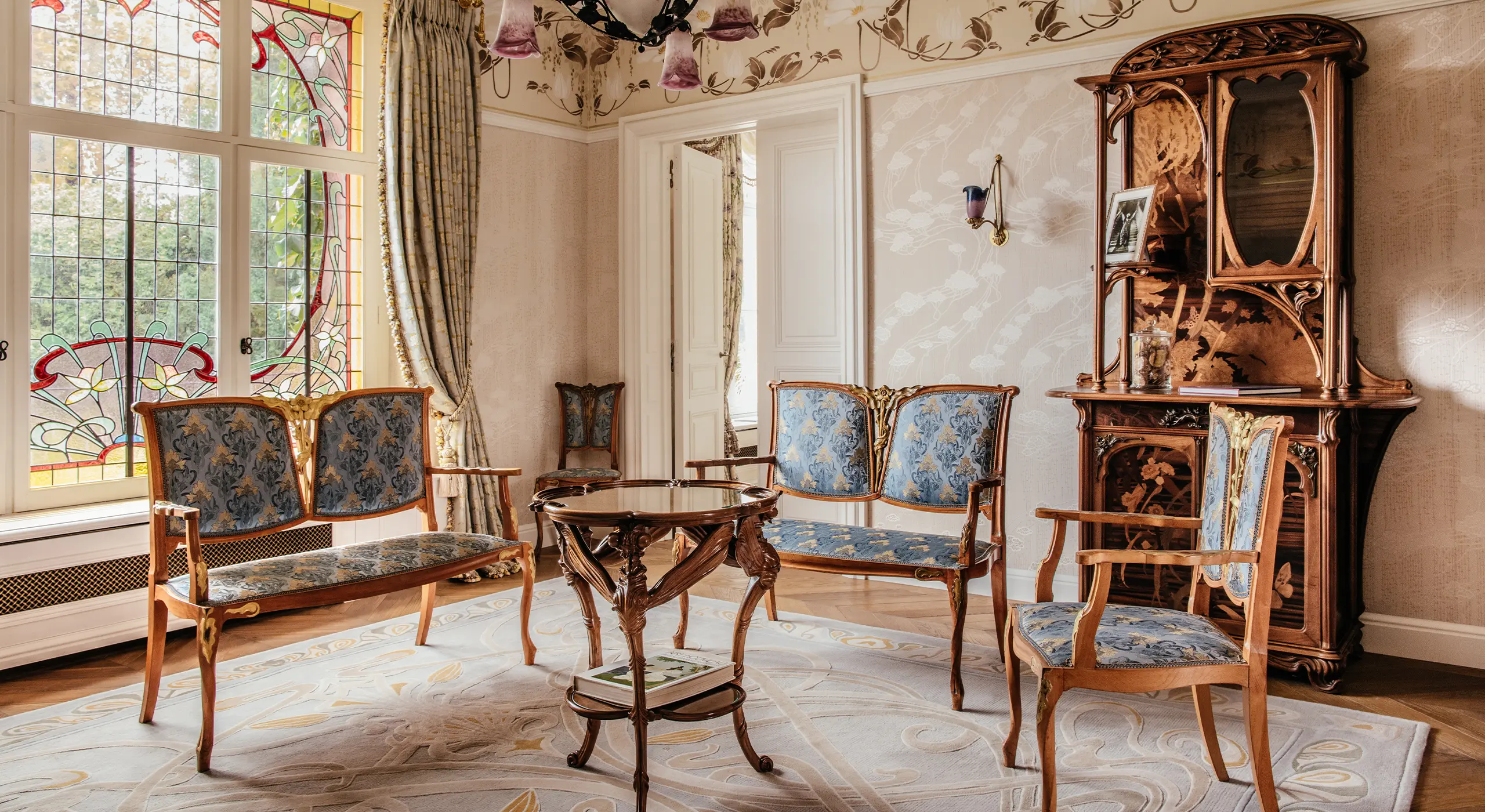
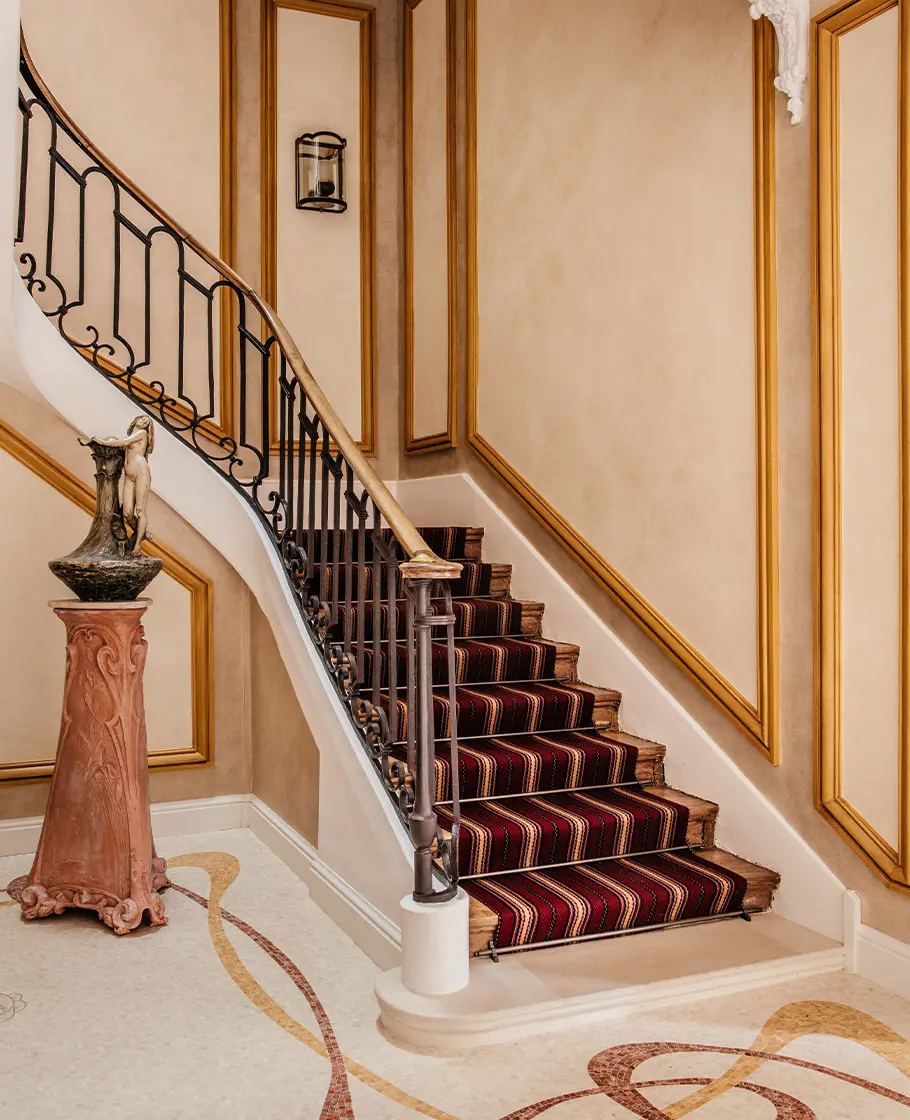
The Maison Belle Epoque in Epernay, once the home of the founding family, reopened after extensive restoration. The elegant mansion, which has UNESCO World Heritage status, showcases Maison Perrier-Jouët’s Art Nouveau collection, the largest private collection of French Art Nouveau in Europe.
It includes rare and priceless works by, among others, Hector Guimard, Louis Majorelle, Emile Gallé and Henri de Toulouse-Lautrec. They dialogue with one-off pieces of contemporary art, commissioned by the House as part of its long-standing partnership with world-leading design fair Design Miami/, which reinterpret its Art Nouveau heritage for the 21st century.
It includes rare and priceless works by, among others, Hector Guimard, Louis Majorelle, Emile Gallé and Henri de Toulouse-Lautrec. They dialogue with one-off pieces of contemporary art, commissioned by the House as part of its long-standing partnership with world-leading design fair Design Miami/, which reinterpret its Art Nouveau heritage for the 21st century.
2020
Séverine Frerson, Cellar Master
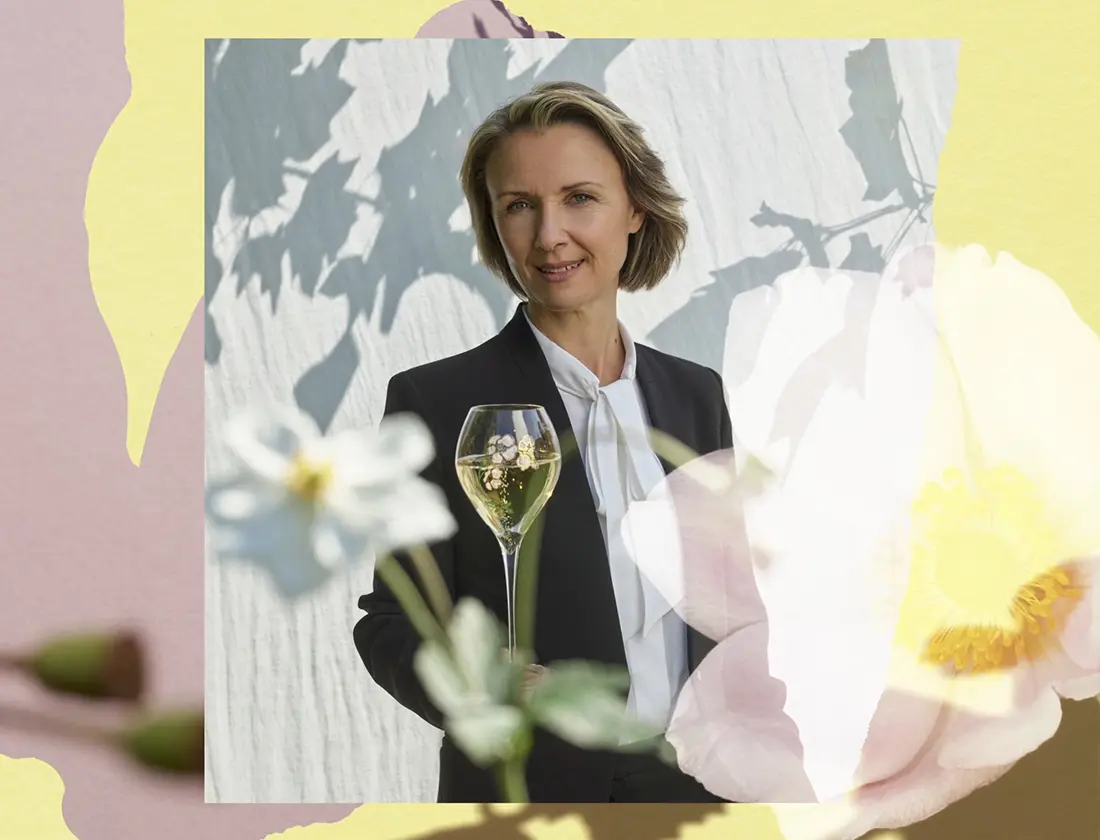
Séverine Frerson was appointed Cellar Master of Maison Perrier-Jouët, becoming only the eighth person – and the first woman – to hold the role in over 200 years, as well as one of the first female cellar masters at a leading champagne house.
Séverine Frerson has a wide range of missions: overseeing the vineyards and cellars, tasting the year’s clear wines and deciding whether to declare a vintage, blending the classic and vintage collections, all while acting as an ambassador in France and abroad. Keenly aware of the impact of climate change, she is also spearheading the House’s transformation of its vineyards and viticulture practices.
Séverine Frerson has a wide range of missions: overseeing the vineyards and cellars, tasting the year’s clear wines and deciding whether to declare a vintage, blending the classic and vintage collections, all while acting as an ambassador in France and abroad. Keenly aware of the impact of climate change, she is also spearheading the House’s transformation of its vineyards and viticulture practices.
2021
Starting an experimental Viticulture program
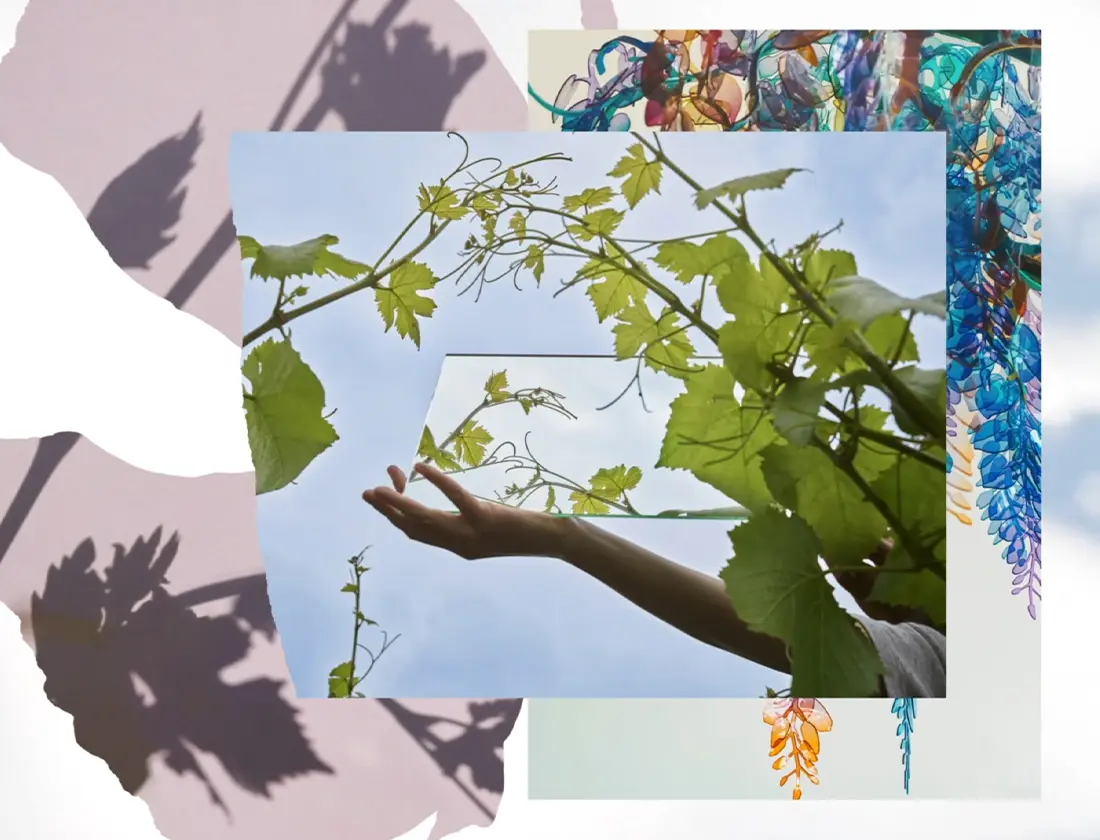
Certified Viticulture Durable en Champagne since 2016, Maison Perrier-Jouët’s own vineyard enteres a new phase by starting the implementatiuon of an experimental viticulture programme.
Following analyses that revealed degraded and compacted soil, the House enlisted the help of experts and launched two new protocols to test various cover crops against a control group.
It replicated the protocol across several plots over multiple years to analyze the impacts on soil health, biodiversity, and yields, with the goal of rolling out these practices across its vineyard and among its partner winegrowers, who supply most of its grapes. The company is learning as it goes, one step at a time.
An affinity with Art Nouveau
Appropriately, given its founders’ love of art and nature, Maison Perrier-Jouët is closely associated with a movement that unites the two. Art Nouveau, which blossomed across Europe in the late 19th century, marked the beginning of a stylistic revolution. Not only was nature, with its graceful, sinuous forms, its main source of inspiration, but its exuberance and creative freedom anticipated the avant-garde art of the 20th century.
The House’s association with Art Nouveau is symbolised by the iconic anemone motif created by Emile Gallé, but the affinities run much deeper. Indeed, the entire ethos of the Art Nouveau movement was about reinventing nature in order to bring beauty to everyday life – just like Maison Perrier-Jouët.
The House’s association with Art Nouveau is symbolised by the iconic anemone motif created by Emile Gallé, but the affinities run much deeper. Indeed, the entire ethos of the Art Nouveau movement was about reinventing nature in order to bring beauty to everyday life – just like Maison Perrier-Jouët.