


Our Commitments
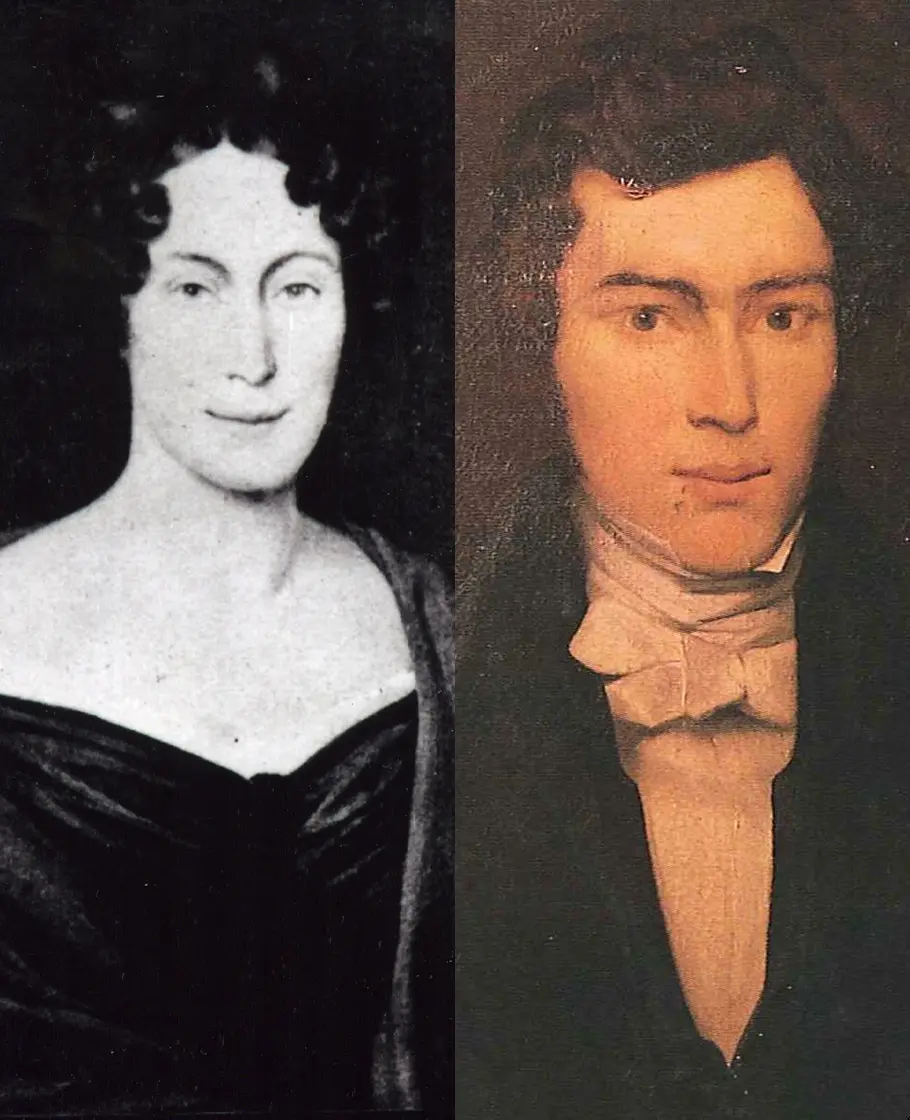
Nature is a source of inspiration for Perrier-Jouët. This passion was passed down from the founding couple, Pierre-Nicolas Perrier and Rose-Adélaïde Jouët, who were enthusiasts of botany and art. Since its founding, Perrier-Jouët has maintained this connection both through its artistic partnerships and in its vineyards, where it explores solutions inspired by nature.
Notably in 2026, Perrier-Jouët established cover crops across 33 hectares, representing 50% of the area of its own vineyards. This agroecological practice helps revitalize the soil by promoting its fertility, water resilience, and both above-ground and below-ground biodiversity, thereby fostering symbiosis among species.
Perrier-Jouët’s own vineyard designs and tests innovative viticulture itineraries on its terroirs. The knowledge gained through these experiments is shared with our partner winemakers, who supply most of its grapes. The House supports them in their agroecological transition by organizing discussion groups, field visits, and trials on their plots. About twenty of pioneering partners are now receiving support in this collective effort toward progress.
Notably in 2026, Perrier-Jouët established cover crops across 33 hectares, representing 50% of the area of its own vineyards. This agroecological practice helps revitalize the soil by promoting its fertility, water resilience, and both above-ground and below-ground biodiversity, thereby fostering symbiosis among species.
Perrier-Jouët’s own vineyard designs and tests innovative viticulture itineraries on its terroirs. The knowledge gained through these experiments is shared with our partner winemakers, who supply most of its grapes. The House supports them in their agroecological transition by organizing discussion groups, field visits, and trials on their plots. About twenty of pioneering partners are now receiving support in this collective effort toward progress.
The legacy of its founders
At Maison Perrier-Jouët, we believe it all starts with a flower, a symbol that embodies the close relationship the House has maintained with biodiversity since its creation in 1811.
Widely renowned for their expertise in horticulture and botany, Pierre-Nicolas Perrier and his son Charles pioneered a number of innovative ideas in the field of natural viticulture and vineyard management.
Charles Perrier was a great believer in simple methods such as the use of steam to combat woodworms in the vine stakes and, in 1953. He published a treatise on combating powdery mildew, a parasitic fungus that affects grapevines. Charles also championed the Picot method, a specific pruning technique, designed to protect the vines from frost.
This passion is still alive today, inciting Maison Perrier-Jouët to constantly explore the interconnections between species that make up the Champagne ecosystem.
Widely renowned for their expertise in horticulture and botany, Pierre-Nicolas Perrier and his son Charles pioneered a number of innovative ideas in the field of natural viticulture and vineyard management.
Charles Perrier was a great believer in simple methods such as the use of steam to combat woodworms in the vine stakes and, in 1953. He published a treatise on combating powdery mildew, a parasitic fungus that affects grapevines. Charles also championed the Picot method, a specific pruning technique, designed to protect the vines from frost.
This
The living world is a marvellous, complex system, existing in a state of fragile equilibrium wherein all species – mankind included – cohabit and interact with one another: the vigor of the vines depends on the quality of the soil.
The vines are part of a landscape that is home to functional biodiversity, which provides regulatory services that benefit the vines.
The vines are part of a landscape that is home to functional biodiversity, which provides regulatory services that benefit the vines.
Each year, the House observes the impact of climate change on the vineyard: early harvests, heat waves, water stress or heavy rains, increased risk of disease, and episodes of hail and frost.
To adapt to these uncertainties and limit the environmental impact of its activities, Perrier-Jouët is evolving its vineyard practices and experimenting, for example, with the use of cover crops, or testing introducing trees & hedges inside the plot (vitiforestry).
To adapt to these uncertainties and limit the environmental impact of its activities, Perrier-Jouët is evolving its vineyard practices and experimenting, for example, with the use of cover crops, or testing introducing trees & hedges inside the plot (vitiforestry).
Working to preserve our priceless biodiversity
2014
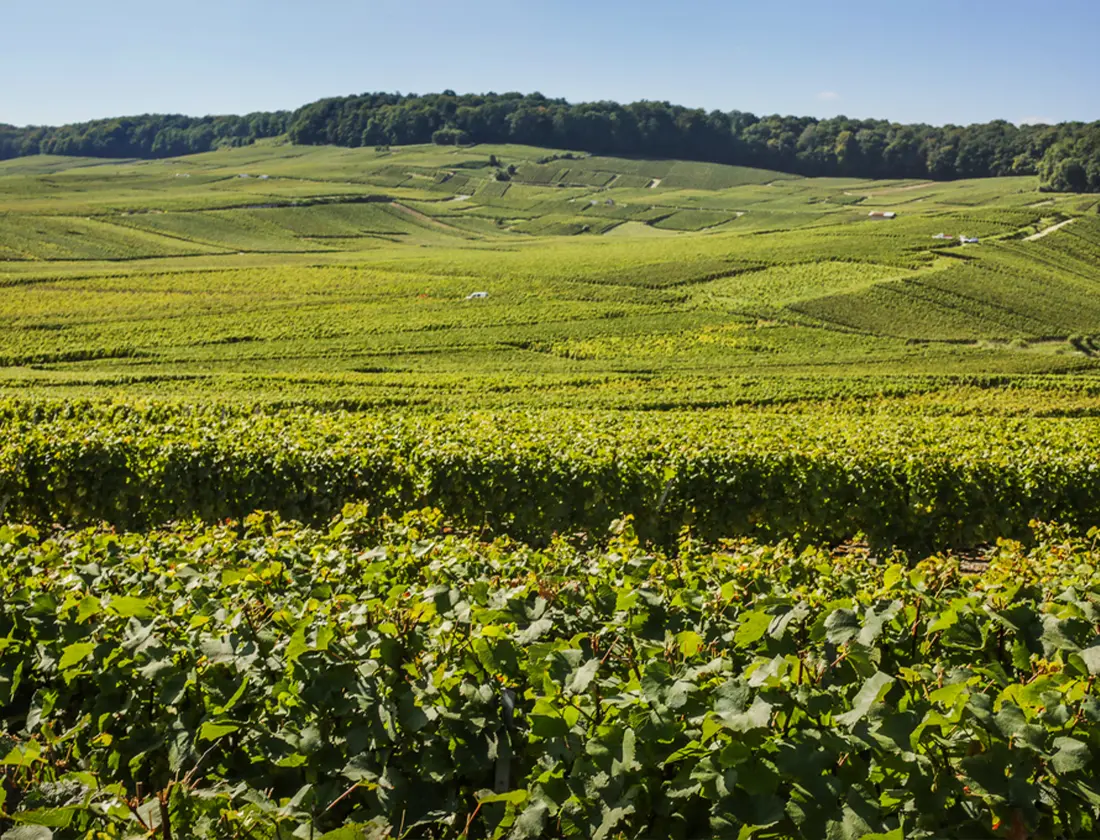
2014-2016 : Trees, shrubs, hedges, low stone walls, and beehives dot the Perrier-Jouët vineyard.
In 2016, the Perrier-Jouët vineyard earned the Viticulture Durable en Champagne (VDC) certification, a certification that is renewed every year
2020
Perrier-Jouët ceases the use of herbicides in its own vineyards and acquires its first Bakus robot.
100% electric and lighter than a tractor, Bakus removes weeds from beneath the vines, while limiting soil compaction. Used in complement of other straddles, it helps improve working conditions for winegrowers.
2021
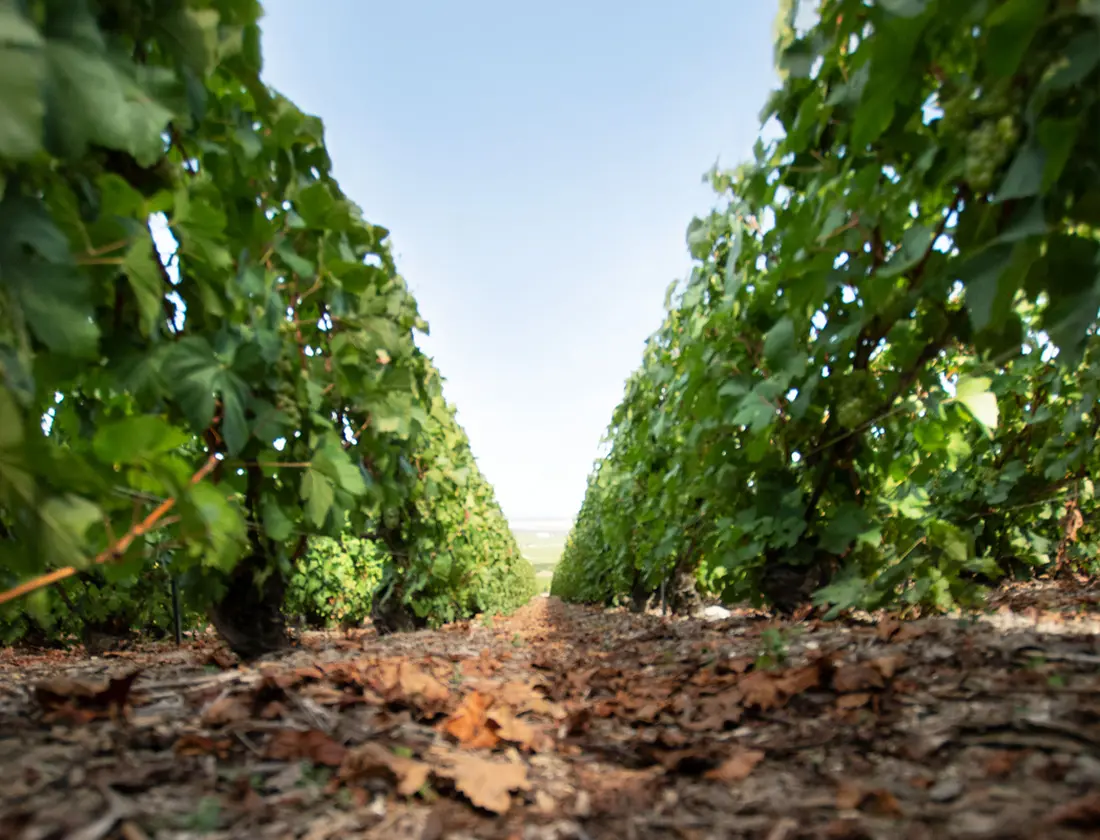
2021-2022: Following analyses that revealed degraded and compacted soil, the House enlisted the help of experts and launched an experimental program to test various cover crops against a control group.
It replicated the protocol across several plots over multiple years to analyze the impacts on soil health, biodiversity, and yields, with the goal of rolling out these practices across its vineyard and among its partner winemakers, who supply most of its grapes.
In 2022, Perrier-Jouët joined “Pour une Agriculture du Vivant,” an association which campaigns for the emergence of a new model of agriculture.
In 2022, Perrier-Jouët joined “Pour une Agriculture du Vivant,” an association which campaigns for the emergence of a new model of agriculture.
2023
2023-2024:
Creation of an experimental vitiforestry plot: planting of 1,200 trees and shrubs in the form of rural hedgerows, green islands, and copses as part of vitiforestry experiments.
Creation of an experimental vitiforestry plot: planting of 1,200 trees and shrubs in the form of rural hedgerows, green islands, and copses as part of vitiforestry experiments.
The Pernod Ricard Group, which owns Perrier-Jouët, joined in 2024 the international business coalition OP2B (One Planet Business for Biodiversity).
2026
Maison Perrier-Jouët extended its experimental viticulture program to 50% of its own vineyard (33 hectares).
Maison Perrier-Jouët is supporting a group of more than 20 partner winegrowers in trialing plant covers in their own vineyards
Soils, Vines, and Biodiversity: A Systemic Approach
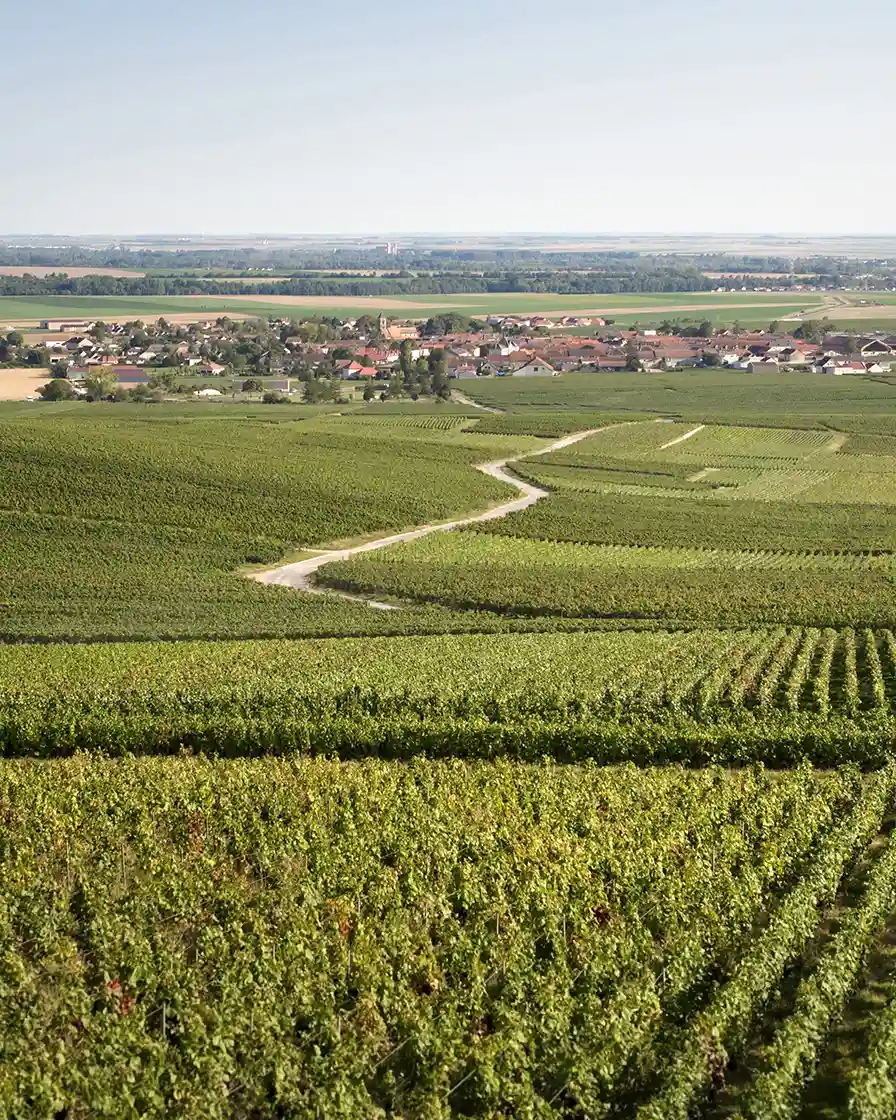
To help its wonderful terroir maintain its delicate balance, Perrier-Jouët is experimenting with a holistic approach that considers the vineyard’s ecosystem as a whole: the soils, local species, and vineyard teams.
It aims to:
-Revitalize the soils and increase their natural fertility
-Improve the resilience of the vines when faced with the effects of climate change
-Provide habitats favorable to local biodiversity enrichment
It aims to:
-Revitalize the soils and increase their natural fertility
-Improve the resilience of the vines when faced with the effects of climate change
-Provide habitats favorable to local biodiversity enrichment
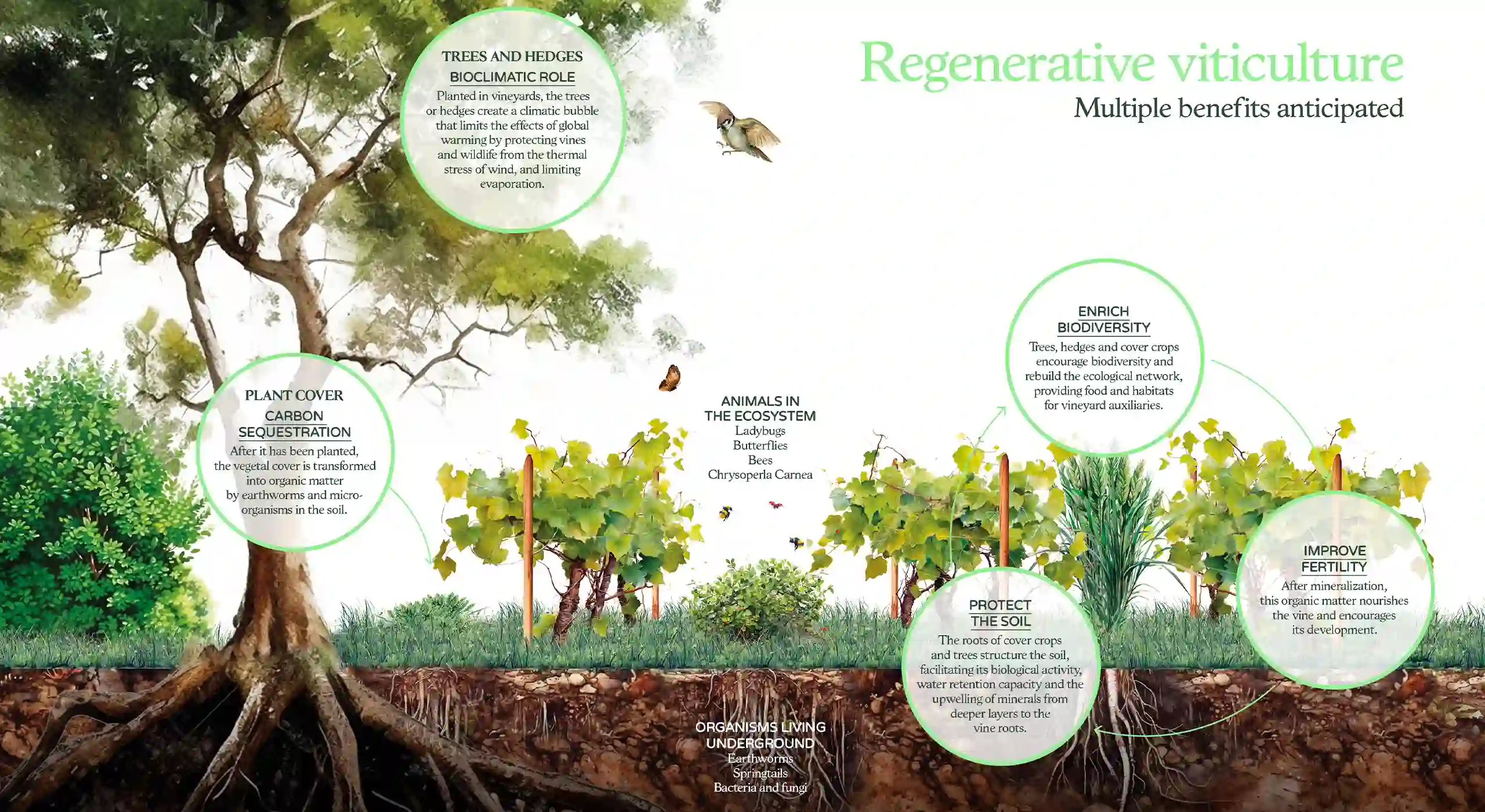
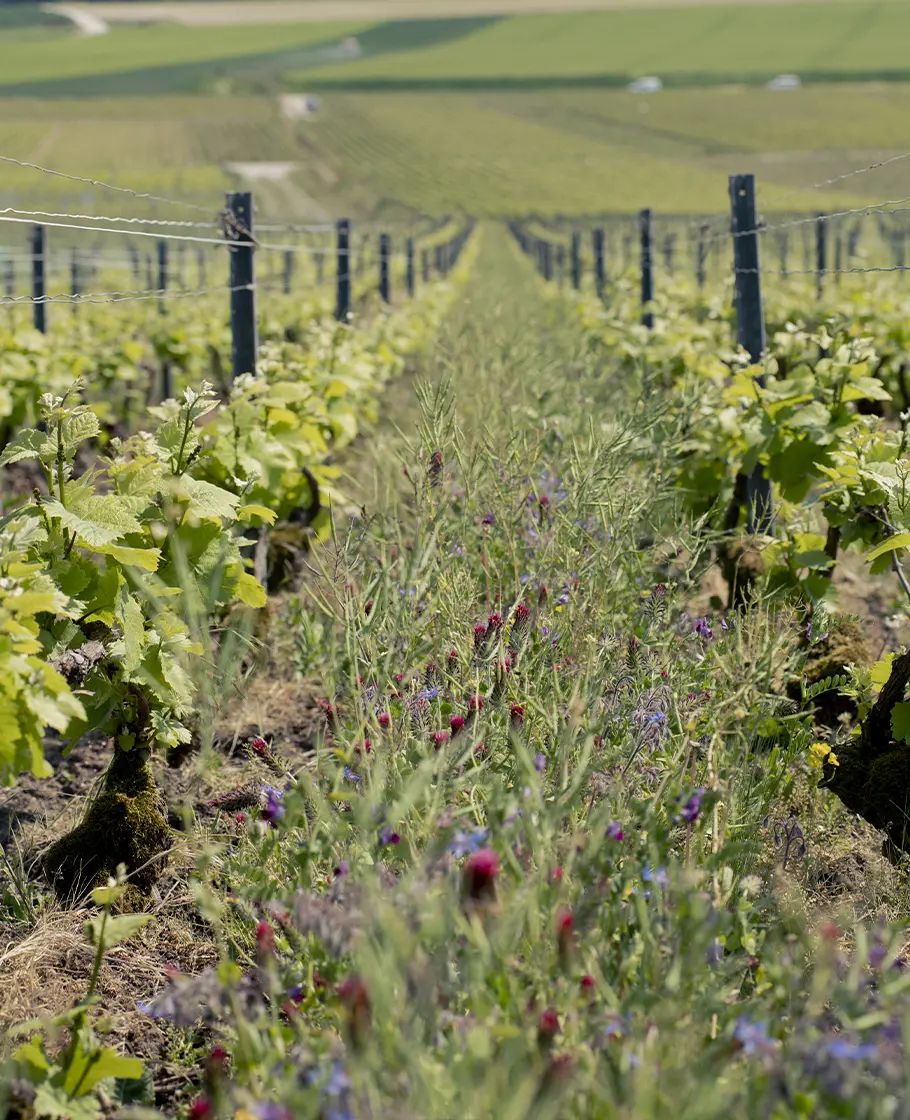
Out in the vineyards, Maison Perrier-Jouët is trialing two types of plant cover.
Biomass cover crops
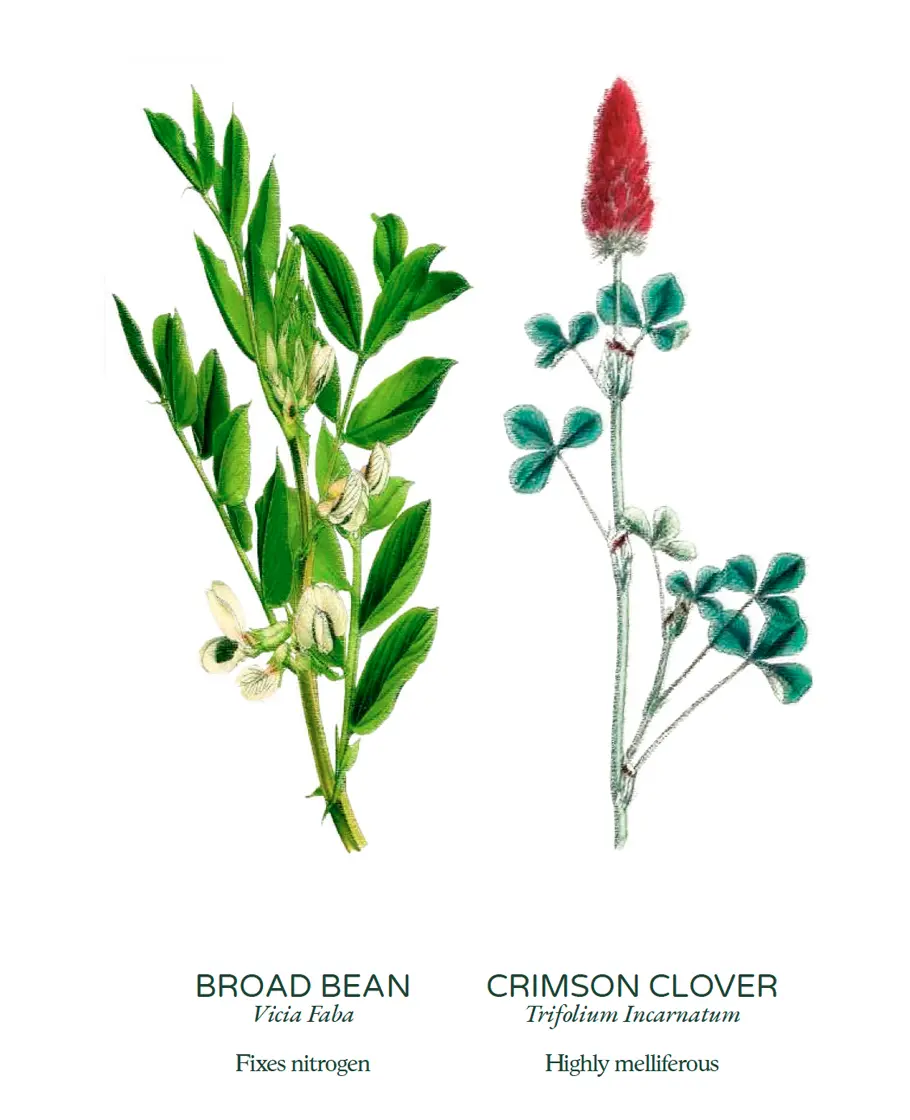
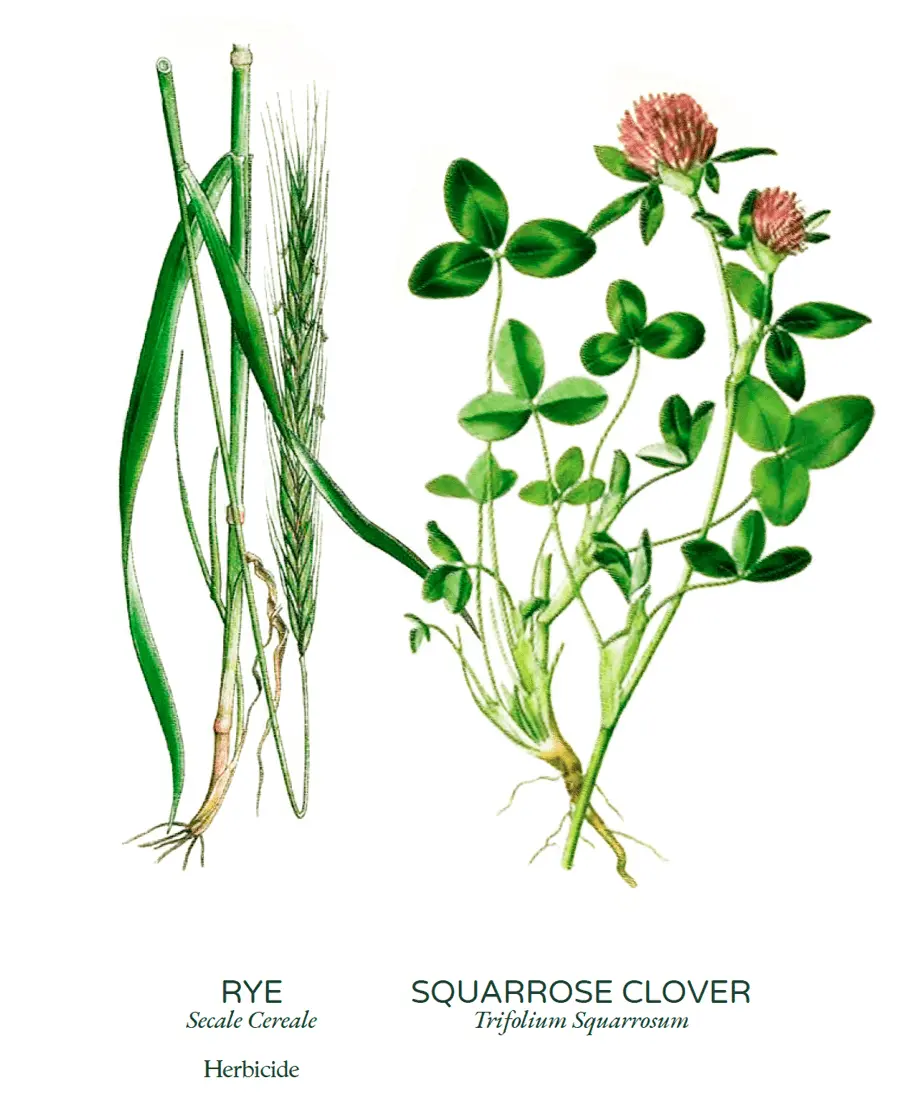
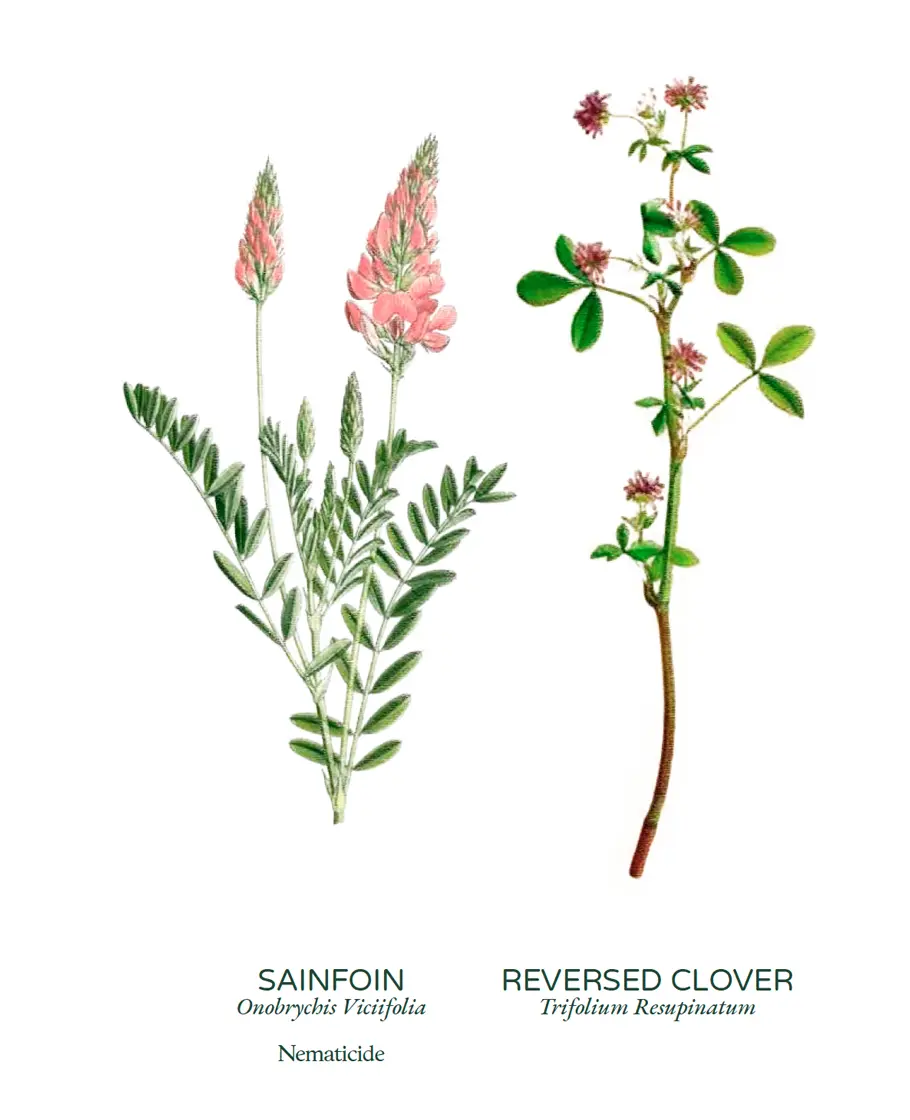
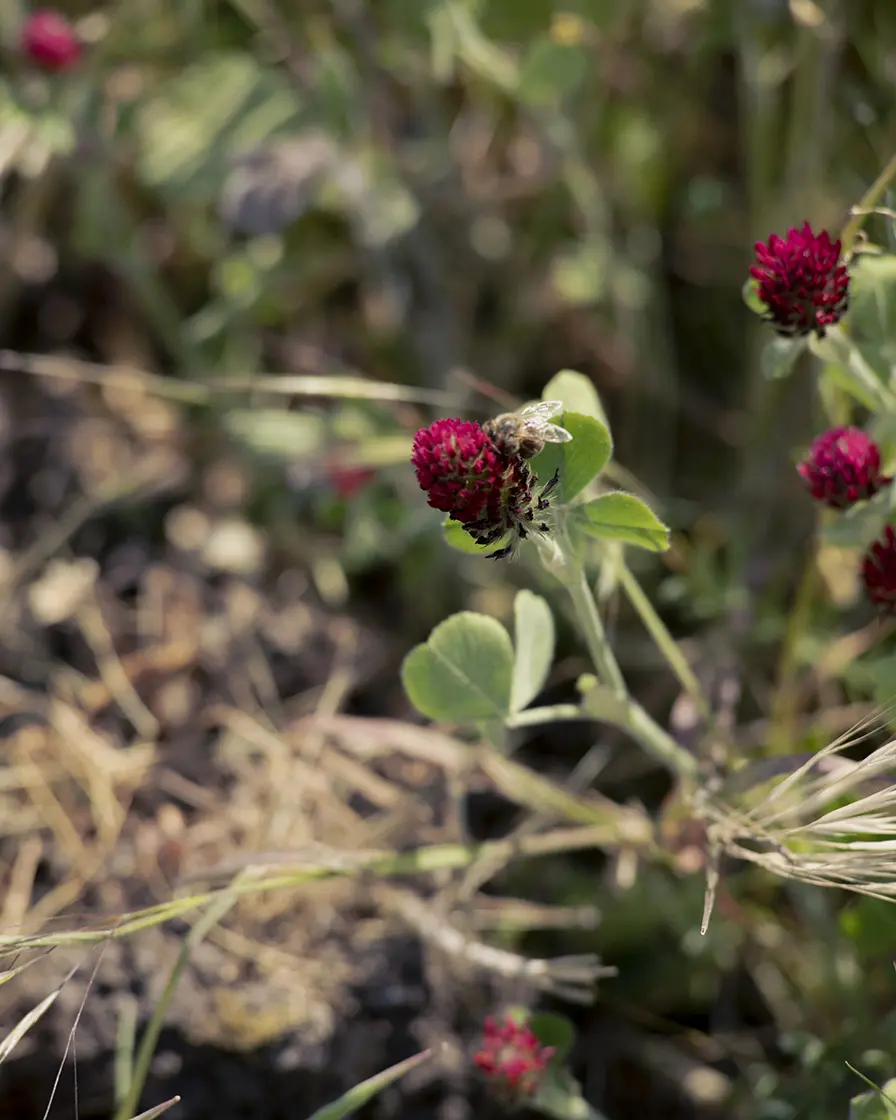
Biomass cover crops are sown after harvesting and grown during spring. After soil layering in early May, they decompose and provide nutrients that promote biodiversity in the soil (bacteria, fungi, earthworms), helping to bring the soil back to life and restore its natural balance. The biomass cover crops used by Maison Perrier-Jouët include forest rye, faba bean, squarrose clover and red clover.
Early results of the experiments observed over the past two years are encouraging. Maison Perrier-Jouët records a positive impact on the structure of the soils, which are less compact than previously.
Early results of the experiments observed over the past two years are encouraging. Maison Perrier-Jouët records a positive impact on the structure of the soils, which are less compact than previously
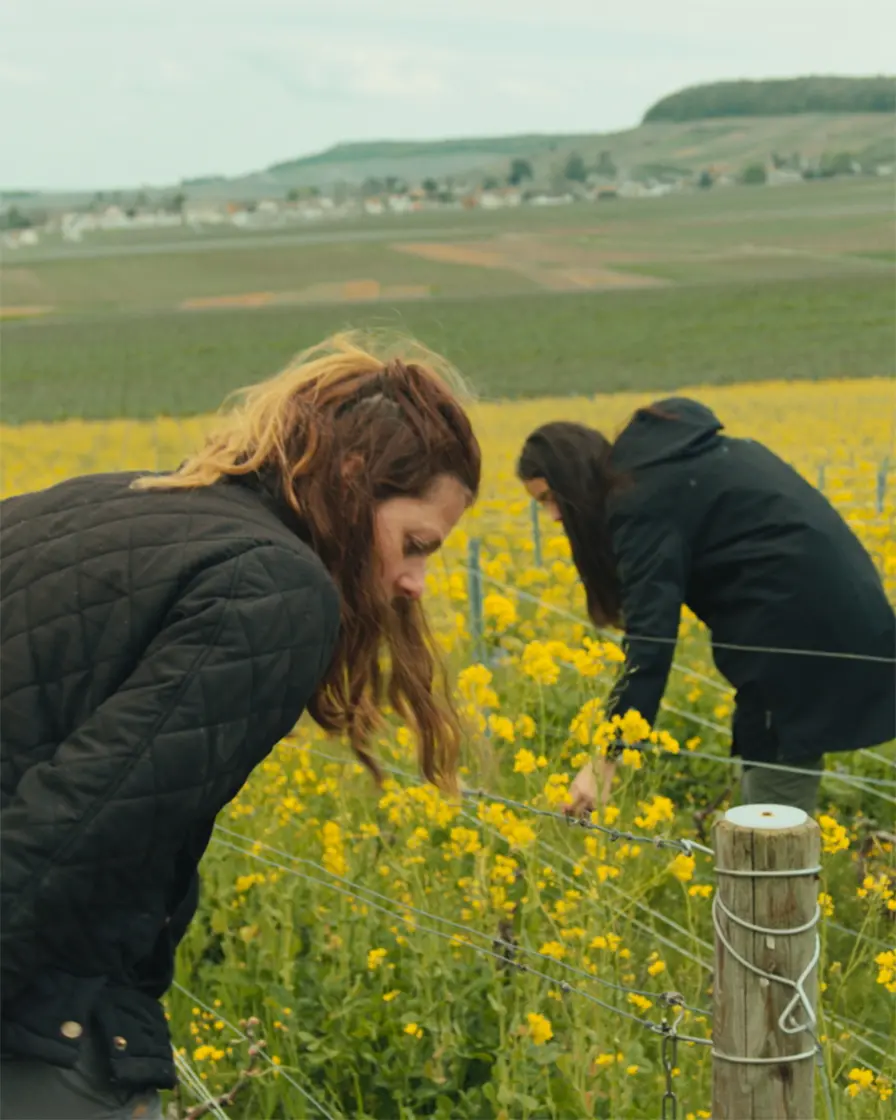
Flowering cover crops
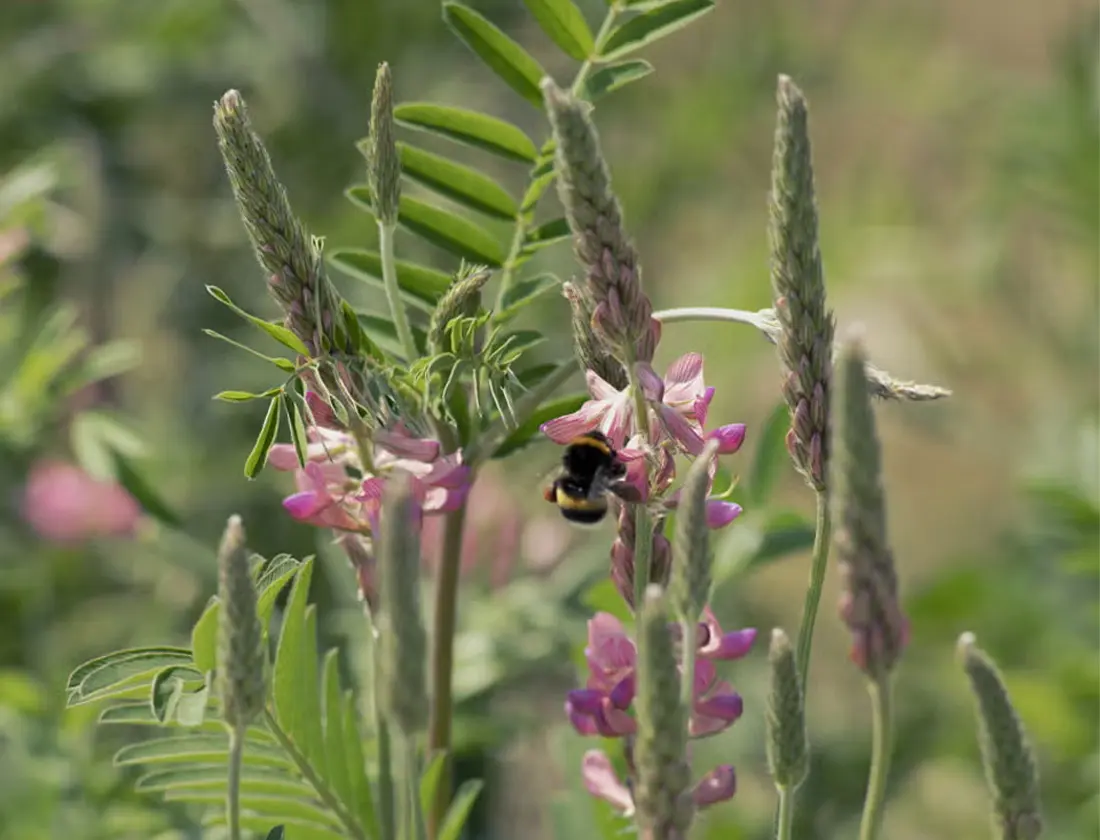
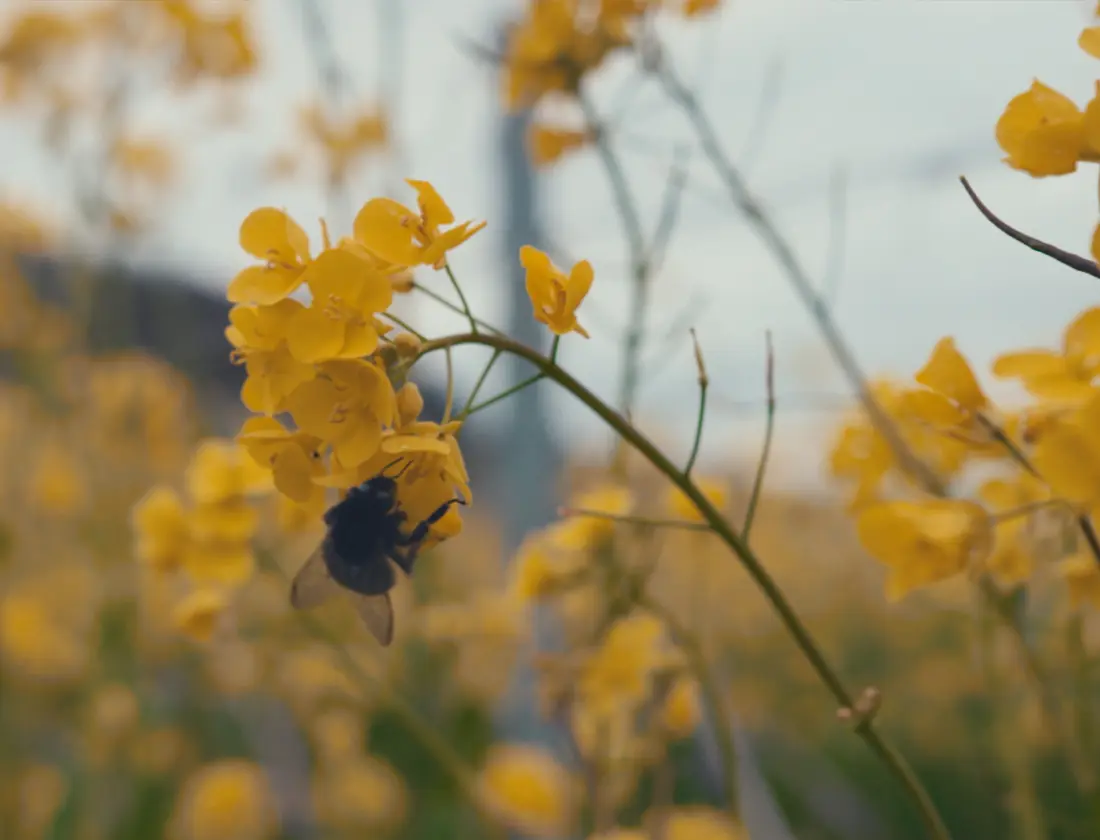
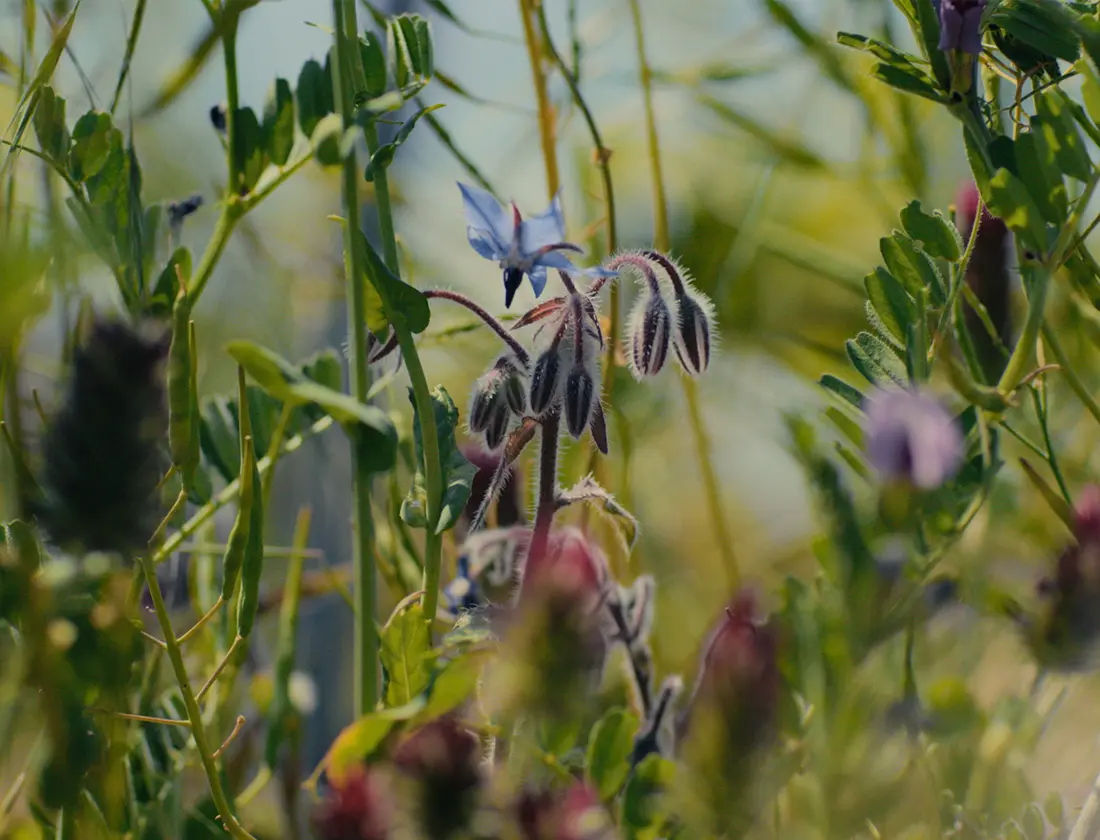
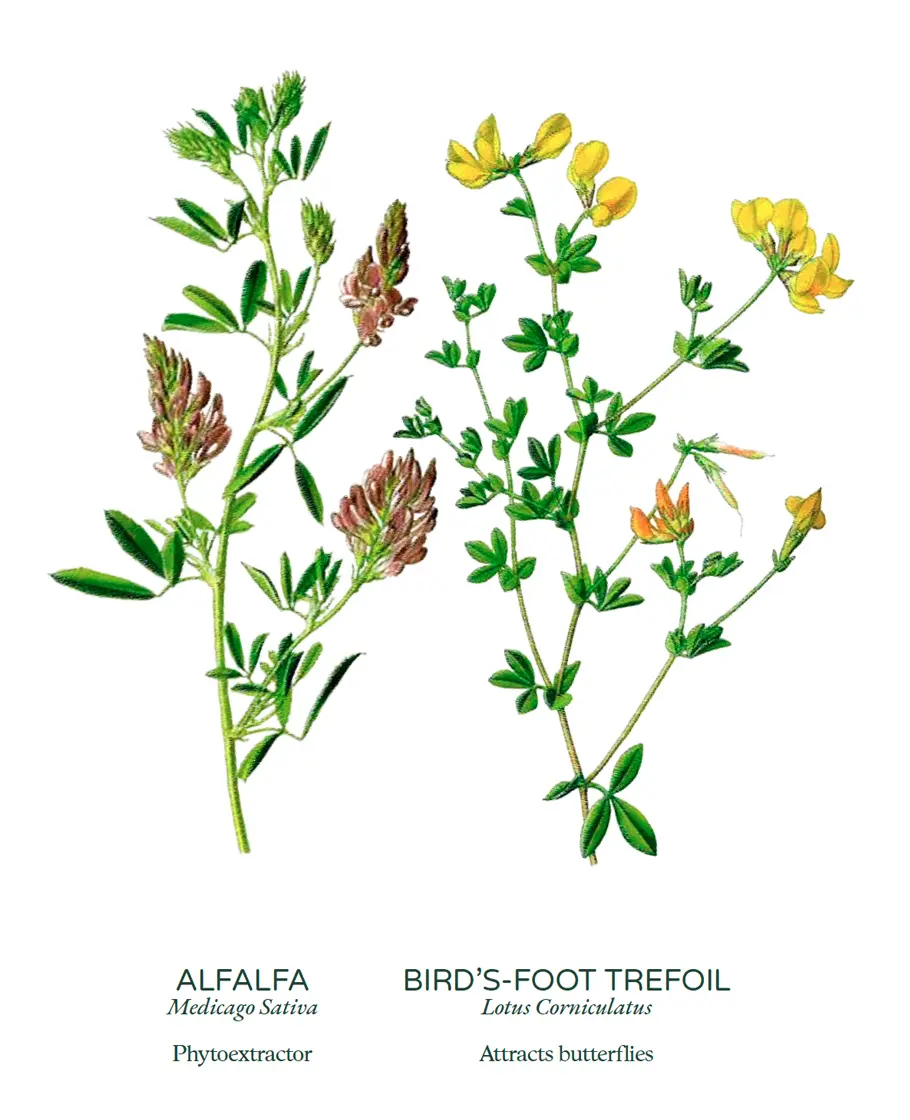
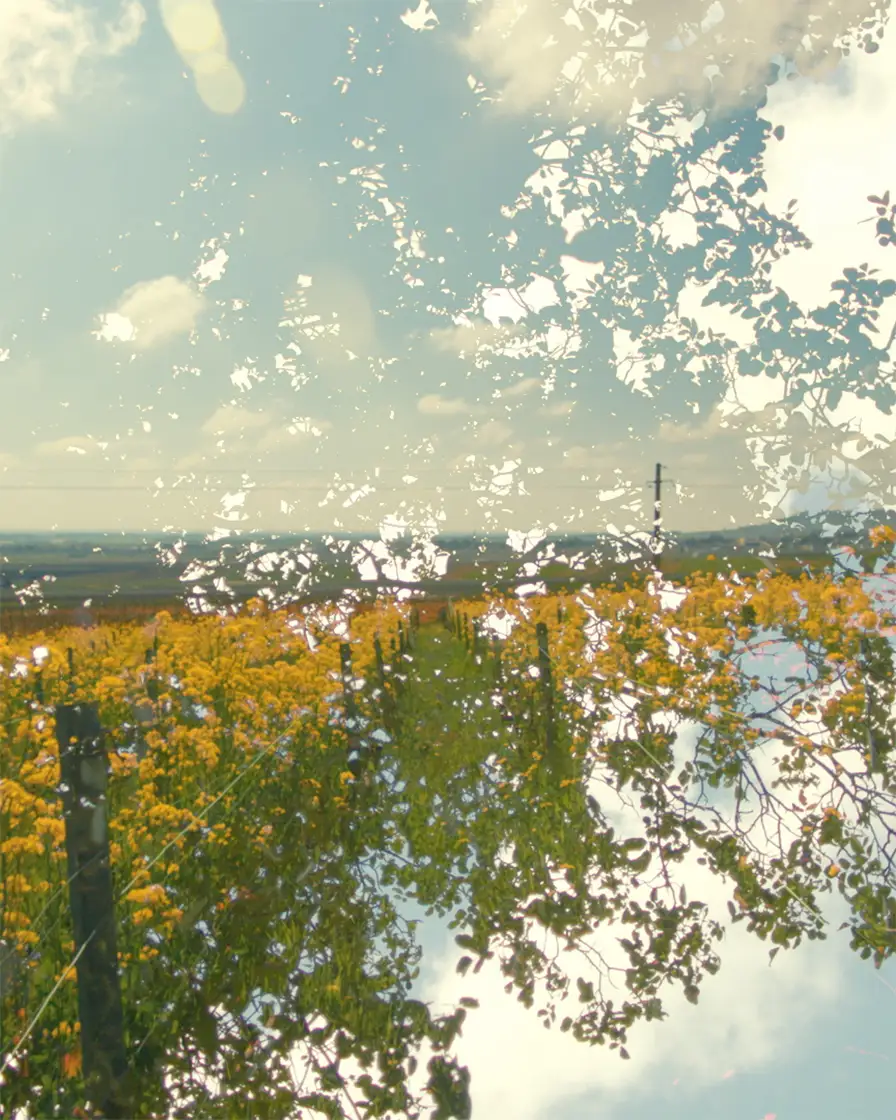
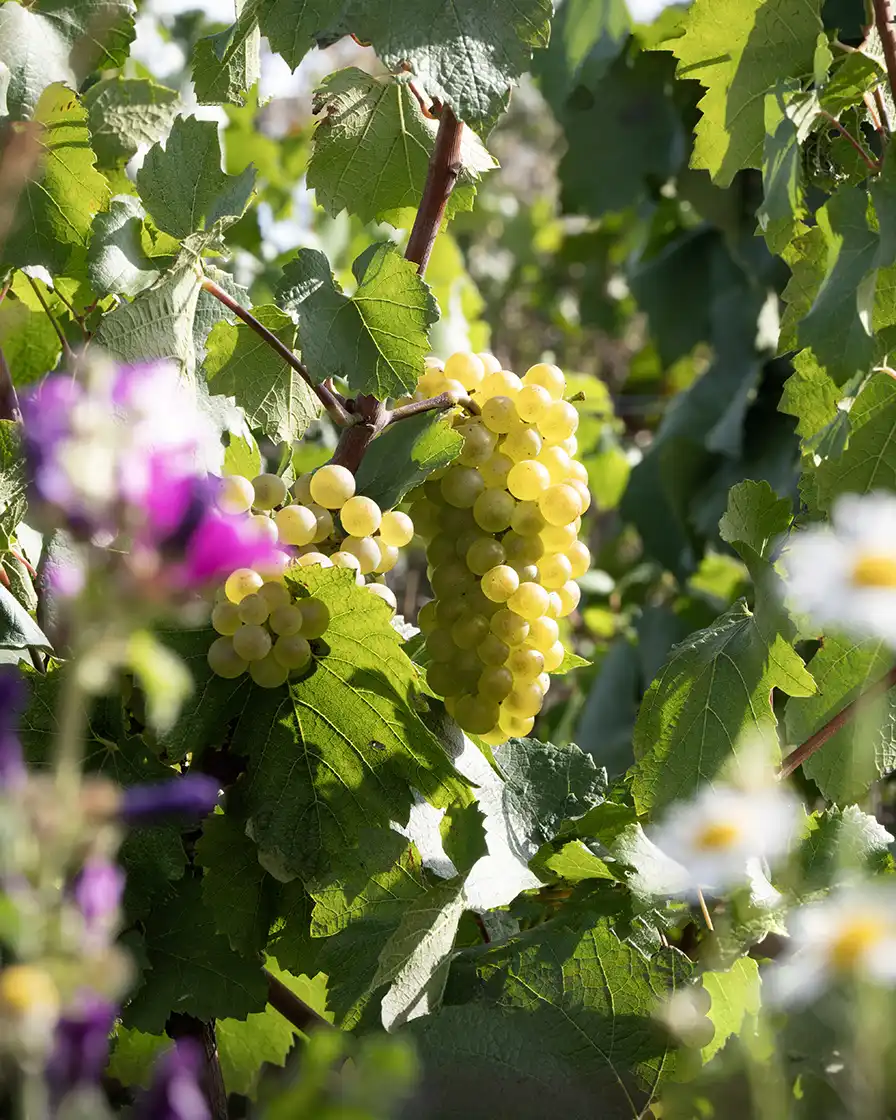
Flowering cover crops are designed to restore biodiversity by offering food and shelter for pollinating insects. They are composed of 14 honey-plant species (wild plants and legumes) and their root systems also help structure the soil and provide additional organic matter. Legumes, help fix nitrogen from the air, thereby offsetting the nitrogen consumption of the other species in the mix.
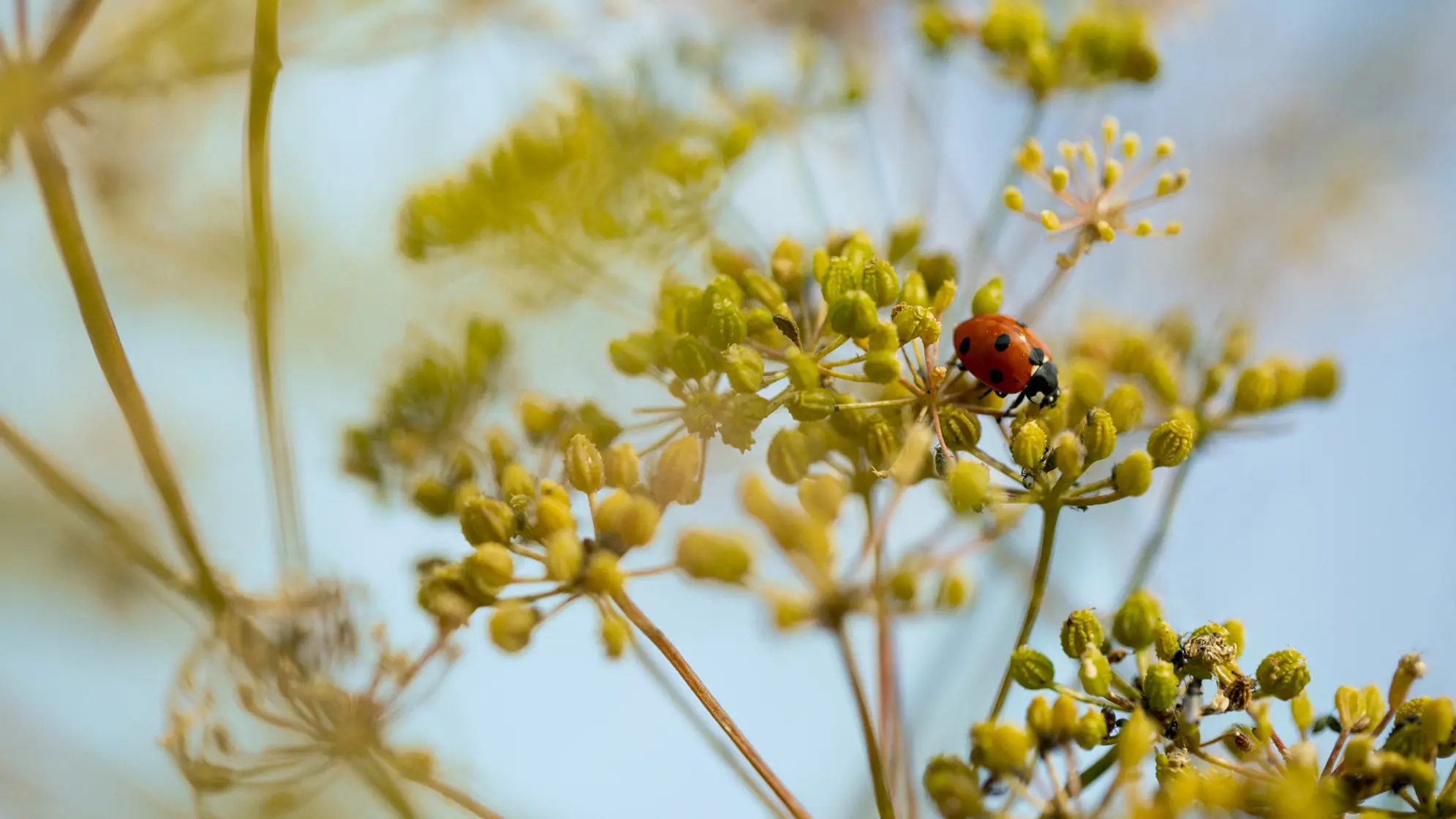
Since 2023, Johanna Villenave-Chasset, entomology and landscape ecology Ph.D., has been conducting biodiversity surveys in the vineyard on specific dates (from May through July). Comparisons with control plots and long-term monitoring show an increased presence in the plant covers of earthworms and certain insects (ground beetles, hoverflies, ladybirds, green lacewings) which are markers of a healthy ecosystem. The plant cover also acts as much to protect the soil, keeping it fresh and moist
Since 2023, Johanna Villenave-Chasset, entomology and landscape ecology Ph.D., has been conducting biodiversity surveys in the vineyard on specific dates (from May through July). Comparisons with control plots and long-term monitoring show an increased presence in the plant covers of earthworms and certain insects (ground beetles, hoverflies, ladybirds, green lacewings) which are markers of a healthy ecosystem. The plant cover also acts as much to protect the soil, keeping it fresh and moist
Vitiforestery
In 2023, almost 2,000 trees and bushes have been planted at Cramant and Mailly
in the form of hedges, small islands of greenery, and groves.
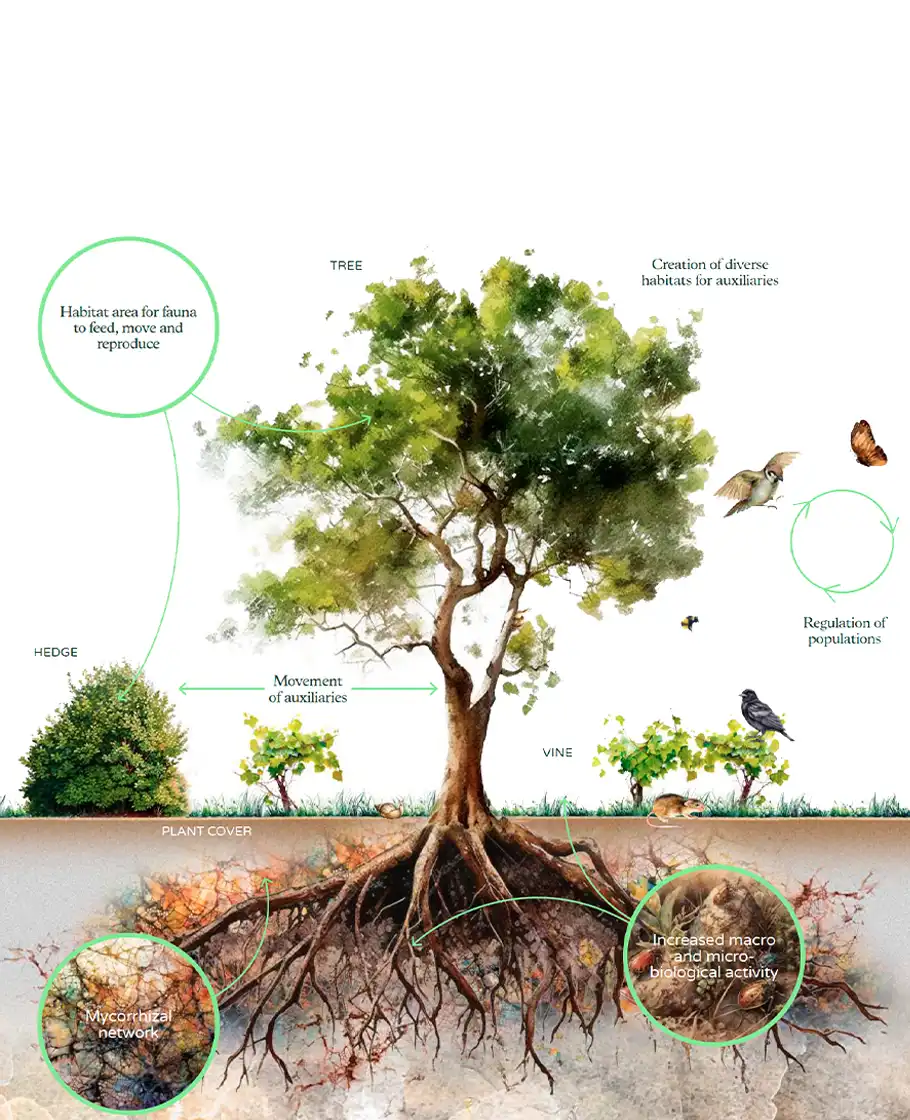
These ecological corridors provide spaces for wildlife to move about, feed, rest and reproduce. Other measures, such as bat boxes, perches for birds of prey, and species counts, help promote biodiversity in the vineyard Entomologist Dr Johanna Villenave-Chasset, who conducts surveys on dedicated plots, explains:
“Between 2023 and 2024, we noticed greater biodiversity in the cover crop test plots. These results demonstrate the importance of biodiversity islands which, situated close to the vineyard, act as reservoirs for auxiliary insects. Planting a variety of strata (flowers, shrubs, trees) enriches the organic diversity of the vineyard.”
in the form of hedges, small islands of greenery, and groves.
These ecological corridors provide spaces for wildlife to move about, feed, rest and reproduce. Other measures, such as bat boxes, perches for birds of prey, and species counts, help promote biodiversity in the vineyard Entomologist Dr Johanna Villenave-Chasset, who conducts surveys on dedicated plots, explains:
“Between 2023 and 2024, we noticed greater biodiversity in the cover crop test plots. These results demonstrate the importance of biodiversity islands which, situated close to the vineyard, act as reservoirs for auxiliary insects. Planting a variety of strata (flowers, shrubs, trees) enriches the organic diversity of the vineyard.”
Initiatives along the value chain
Maison Perrier-Jouët is working to reduce its carbon footprint, focusing on its main sources of emissions:
Rethinking the art of gifting
In 2025, 90% of the House’s bottles were shipped without gift boxes
For its new line of gift sets, Perrier-Jouët is embracing a minimalist approach:
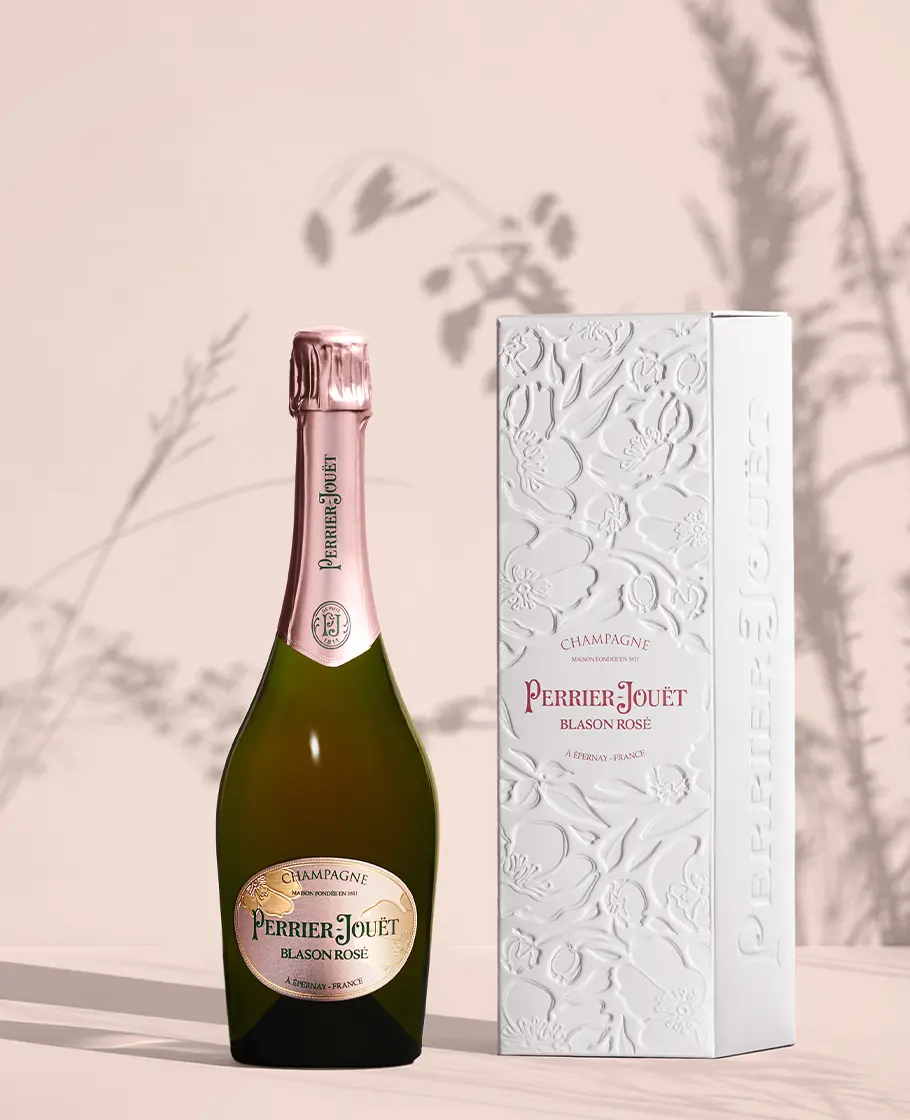
– Made from a single material, 100% natural fibers, this gift box features a reduced ink-printed area (3% to 23%), and is 30% lighter than previous gift box.
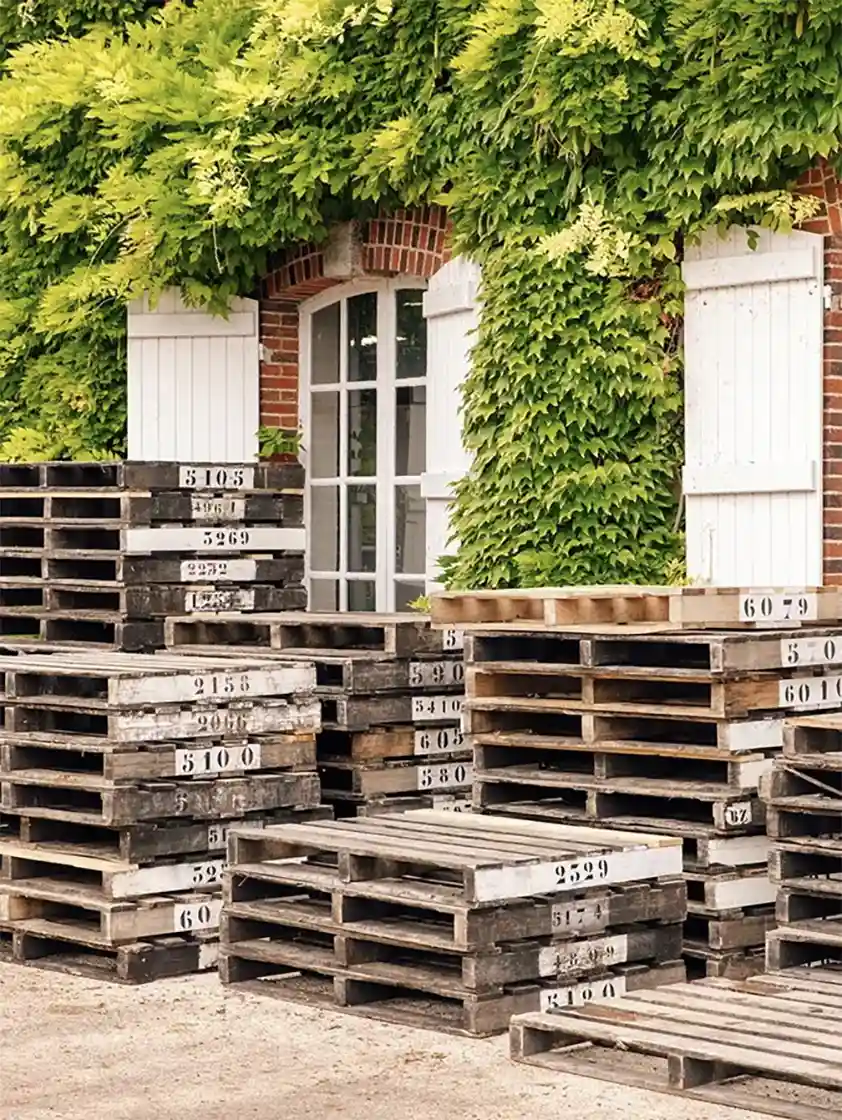
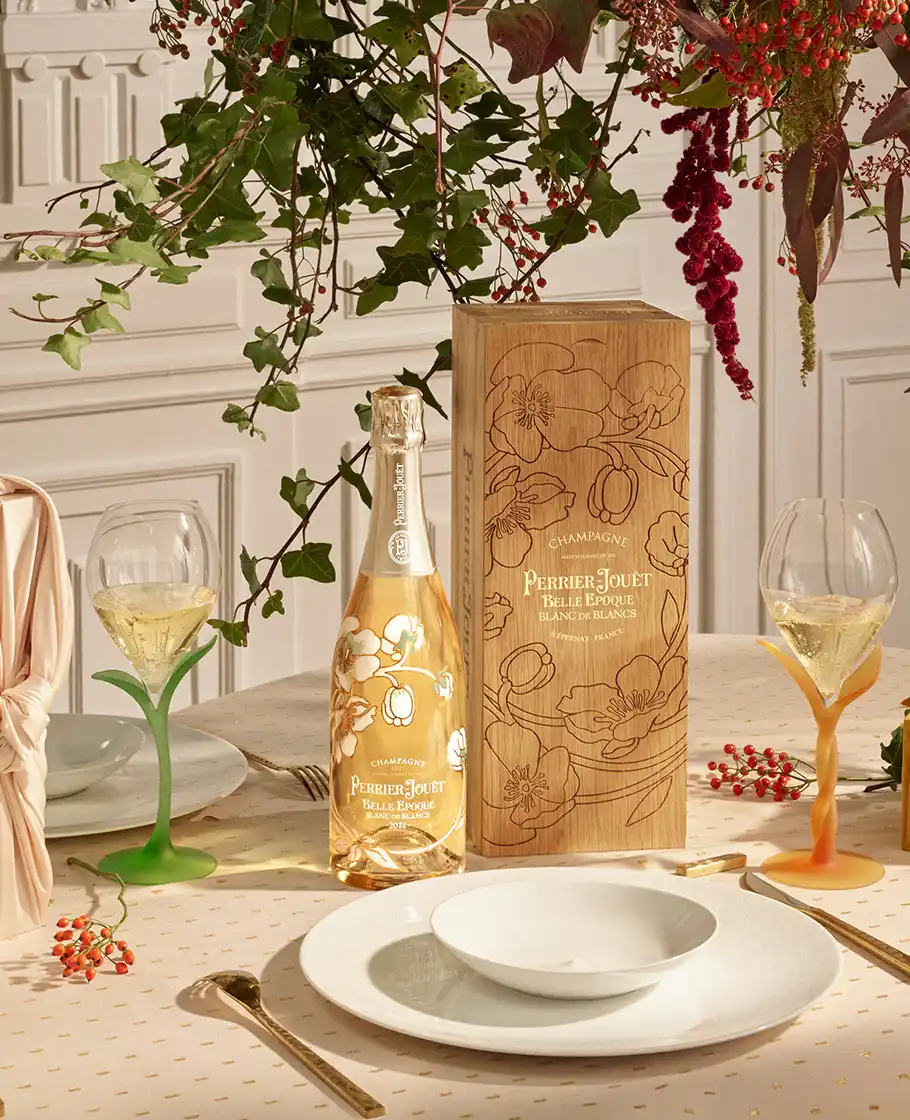
– Designed for the large-format bottles of the Perrier-Jouët Belle Époque cuvées and the Perrier-Jouët Belle Époque Blanc de Blancs cuvée (150ml and 300ml), this wooden gift box embraces upcycling. It is crafted from untreated wood scraps left over after cutting staves (wooden slats used to make barrels) and sourced from a family-owned business committed to the sustainable management of French forests.
For its new line of gift sets, Perrier-Jouët is embracing a minimalist approach:
– Made from a single material, 100% natural fibers, this gift box features a reduced ink-printed area (3% to 23%), and is 30% lighter than previous gift box.
– Designed for the large-format bottles of the Perrier-Jouët Belle Époque cuvées and the Perrier-Jouët Belle Époque Blanc de Blancs cuvée (150ml and 300ml), this wooden gift box embraces upcycling. It is crafted from untreated wood scraps left over after cutting staves (wooden slats used to make barrels) and sourced from a family-owned business committed to the sustainable management of French forests.
These boxes are made from pieces of untreated wood left over after the staves used in barrel-making have been cut and recovered from a family business committed to the sustainable management of French forests.
Creating and distributing wine
- All of the House’s production sites use electricity from renewable sources. In 2027, the Épernay sites connect to the city’s biomass network, to replace natural gas.
- In its own vineyards, the House switched to biofuel (HVO 100) for its agricultural vehicles in 2023, a synthetic biodiesel made from waste and vegetable oils,
- The House prioritizes maritime, river, and rail transport over road transport to transport containers to the port or to deliver to certain markets.
- Throughout the entire transportation chain, the company works to optimize loads and increasingly use biofuels to reduce its carbon footprint on remaining road distances.
Precious resources
All of the by-products of the fermentation process (lees, sediment and the must left after disgorging) are reused in various ways. They are collected by a local distillery and transformed into ingredients for use in cosmetics (essential oils), food and drink (oils) or nutrient-rich compost.
Call for Biodiversity Projects
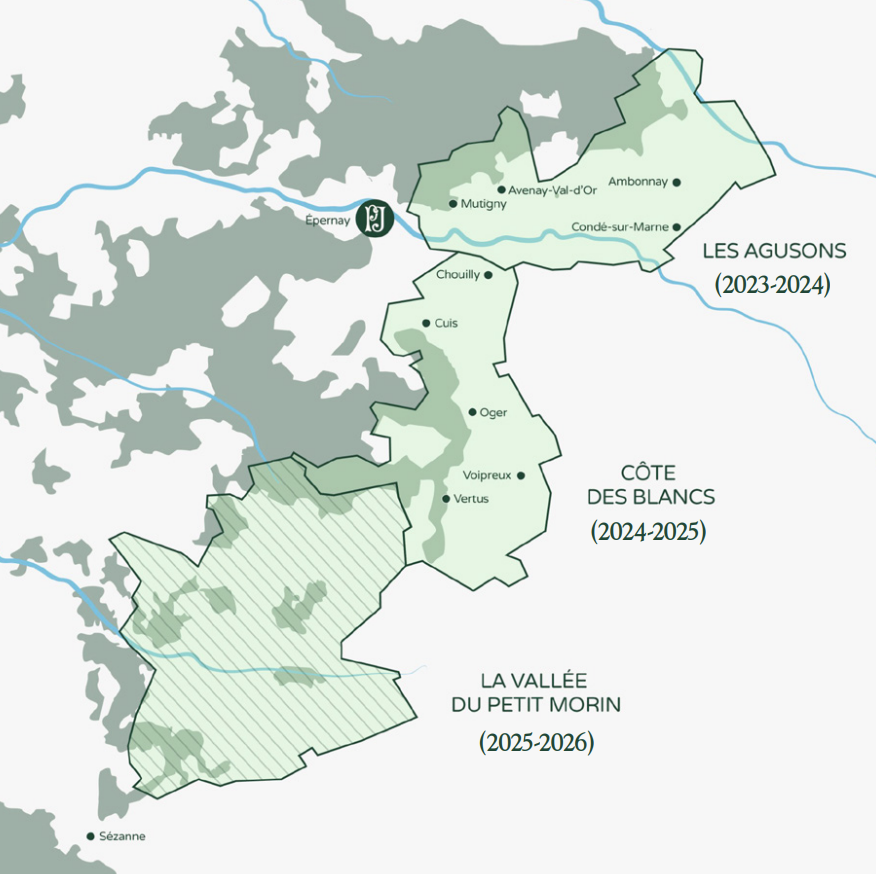
Maison Perrier-Jouët supports local biodiversity initiatives across Champagne through annual calls for projects, launched in Ambonnay in 2023 and and subsequently expanded and renewed.
Conducted in partnership with UNESCO’s Champagne Mission and the Comité Champagne, the initiative helps create connected biodiversity habitats across forests, vineyards, agricultural land and villages.
So far, 18 local projects have been selected and supported, including hedgerow and copse planting, soil-cover initiatives, wetlands and orchards restoration, biodiversity islands, and biodiversity trainings and workshops with schoolchildren and residents.
Conducted in partnership with UNESCO’s Champagne Mission and the Comité Champagne, the initiative helps create connected biodiversity habitats across forests, vineyards, agricultural land and villages.
So far, 18 local projects have been selected and supported, including hedgerow and copse planting, soil-cover initiatives, wetlands and orchards restoration, biodiversity islands, and biodiversity trainings and workshops with schoolchildren and residents.